
#DailyWritingChallenge Day 39: Responsibility

Being responsible means being dependable, keeping promises and honoring our commitments. It is accepting the consequences for what we say and do. It also means developing our potential. People who are responsible don’t make excuses for their actions or blame others when things go wrong.

I have always been a responsible person. I may be rebellious at times, a rule breaker when I feel like it, but I am not someone who leans to being irresponsible.

I was brought up in a house where we were expected to be responsible for ourselves, our home, our belongings. Chores… pocket money… Saturday jobs… these routines and expectations grew as we matured and instilled a sense of responsibility in my sister and I. My parents were young and both worked full-time as self-employed business owners, we all chipped in to make our house run. We made our beds, we laid the table, we stacked the dishwasher and we ironed our own clothes.

From the age of 12 I was a babysitter and would be paid to look after my parents’ friends babies and toddlers whilst they went down the road for dinner. From the age of 13 I had a Saturday job working as a chamber maid, then a kitchen hand, then a waitress. I earned my own money. Each of these opportunities and experiences made me a responsible young person.

Becoming a teacher, becoming responsible for a class, a year group, a subject, a faculty, a school were natural steps in the level of responsibility I felt comfortable carrying on my shoulders.

The sense of responsibility felt the heaviest when things went wrong, when we had accidents and incidents where people were at risk. The responsibility of safeguarding a vulnerable community was the thing that weighed me down the most, the emotional fatigue from the constant emotional labour of holding a space for children who had been let down by their families, by society, by the system.

Leaders take responsibility, it is a decisive action. They don’t make excuses, they may make mistakes, but they make decisions that affect others and they carry that responsibility. The more senior you are, the more responsible you become, and you learn to sit with that constant gnawing feeling.

Watching the last 7 weeks unravel, I can only guess at the sense of responsibility that school staff are wrestling with. These days I am only responsible for myself. I feel much lighter as a consequence.

Responsibility was one of our 12 core school values that we embedded when I was a Headteacher – we encouraged our community to be responsible for themselves, for each other, for our environment. Exploring the different layers of responsibility we broke it down into sub-categories and scrutinised it as a shared value:

  • Individual responsibility – our words, our actions and our behaviour as humans.
  • Collective responsibility – an awareness that we impact others and are all cogs.
  • Personal responsibility – keeping ourselves physically and emotionally safe.
  • Professional – modelling what the adults were responsible for.
  • Familial – being clear about we expected our parents/carers to be responsible for.
  • Financial – learning how to manage our money.
  • Moral – developing how to be responsible and how integrity.
  • Social – holding each other to account  for our impact on society.
  • Environmental – being mindful and respectful of our impact on our world.

One way we did this was through our Global Citizenship lessons and our teaching of the Sustainable Development Goals. We made it clear to our young people that they will be the leaders of the future, global citizens with global human values.

Society and the world have changed a lot since my childhood and formative years at school. Lots of the opportunities to become responsible have been removed or have been restricted. I hope that this wake up call is an opportunity for us to refocus on bringing a sense of responsibility back to us as individuals and as communities as it needs to be at the core of the young people we shape who will enter the world of work as change makers of the future.

We need to take responsibility that it is our actions that impact our community and our world.
responsibility 4

#DailyWritingChallenge Day 38: Authenticity

Authenticity is about presence, living in the moment with conviction and confidence and staying true to yourself. … Authentic is defined as: “not false or copied; genuine; real” and can also be described s “representing one’s true nature or beliefs; true to oneself or to the person identified.”

Authenticity is something I think, talk, read and listen about a lot. It is a word I mull over and explore. I have blogged about it, spoken about it at events and built it into training I have designed and led.

I don’t know what my parents put in my porridge when I was growing up but since I was a teen I have been stubbornly authentic. I describe myself as Marmite, I don’t evoke neutral responses, you either love me or you hate me, and I am fine with that.

In Mark Chatley’s blog yesterday he quoted someone making a distinction between being liked and being respected at work, I care about being respected for my personal and professional integrity, I don’t need to be liked by others for my own sense of self-worth as I like myself. I am self-assured about my own worth. I self-validate who I am.

I am conscious that others do not have the self-confidence and high self-esteem that I have and that they want to work on it and nurture it. I am also acutely self-aware that confidence can be interpreted as arrogance if it becomes too amplified. It is a fine balancing act between being confident, being humble and being true to yourself.

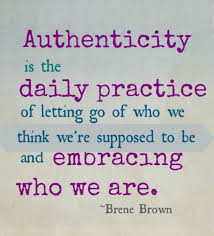
A thought leader you cannot avoid when you are reading about what it means to live an authentic life and what it means to be your authentic self is the brilliant Brene Brown:

“To be authentic, we must cultivate the courage to be imperfect – and vulnerable. We have to believe that we are fundamentally worth of love and acceptance, just as we are. I’ve learned that there is no better way to invite grace, gratitude and joy into our lives than by mindfully practising authenticity”.

Brene Brown

This quote is so rich and dense with our values I am going to unpack each one she mentions, ironically we have already explored a lot of them as part of our #DailyWritingChallenge values journey over the last 7 weeks as we use the social isolation time to look inwards:

Courage: being yourself means digging deep and revealing the real you, your whole self and not being a chameleon who transforms into the person other people want or expect to see.

Perfection: once we recognise and accept that we are all flawed, we can stop comparing ourselves and we can manage our inner critic, slowly turning the volume down on the negative self-talk.

Vulnerability: removing the mask, exposing our hearts and souls, lets others see the real us, our core, this can feel scary but it is also very empowering.

Self-belief: our confidence is worn on the outside, our self-esteem is how we feel on the inside, we need to have the conviction to believe in our skills, qualities and strengths, we need to know the value that we can bring.

Self-love: we all want to be loved, but we need to first seek that love from within, rather from outside, if you love yourself, including the imperfections, then the wall comes down to welcome others to do the same.

Acceptance: the word tolerance is used a lot these days, but no-one wants to be tolerated, as there is a sense of people having to put up with something or someone, we all seek a sense of belonging, we all want to be seen and heard, we all need to be accepted.

Grace: this is the one I grapple with in this context, I don’t see myself as being physically graceful, I think this is because I am tall/ big, and have always been teased for being clumsy, but my actions and attitude can be graceful, I can honour myself and others.

Gratitude: we have lots to be grateful for and we can often forget this, we can appreciate the external things, the material goods, but we also need to practise being grateful for the things that are intangible, the qualities we have nurtured over time, the the things that make us unique.

Joy: our personal fulfilment, our sense of satisfaction and our joy in being alive, in being ourselves, is amplified when we are comfortable in our own skin and we surround ourselves with people who celebrate our authentic selves.

Mindfulness: being mindful is another quality I am nurturing, I am empathetic and compassionate to others, I am emotionally intelligent, yet I am candid, direct and can be harsh with my words as I give feedback at times, I am practising how to be mindful in how I gift advice.

I think the verb choice is important in this quote: to cultivate, to believe, to learn, to invite, to practise. Each of these behaviours and actions are conscious and intentional, they are about transformation over time.

In my peer support coaching circles over the last 7 weeks we have talked a lot about things we are consciously embracing, things we are intentionally letting go of, we have focused time and attention on nourishing ourselves through daily practices that serve us.

One such daily ritual that I recommend is the self-empowerment from the practice of Daily Affirmations.

Affirmations are a powerful way to improve your mindset on a daily basis, and research on The Psychology of Change: Self-Affirmation and Social Psychological Intervention has shown that they can increase our feelings of self-worth. Affirmations are positive reminders or statements that can be used to encourage and motivate yourself or others. Often it’s a lot easier to affirm others than it is ourselves, but we need to remember to encourage ourselves as well.

Here is an example of an affirmation you could say with conviction to yourself each morning in the mirror until you believe it. It is the verbal Power Pose to shape your mindset of how you feel about yourself:

I give myself permission to do what is right for me.

I allow myself to be who I am without judgment.

I give myself space to grow and learn.

I listen to my intuition and trust my inner guide.

I trust that I am on the right path.

Being your authentic self is liberating and empowering. I highly recommend it as your time and energy can then be invested as a resource to serve your purpose.

Authenticity for me is:

  • Being true to yourself;
  • Thinking inwardly, looking outwardly;
  • Treating others with respect and kindness;
  • Living in the moment;
  • Listening with an open mind.


#DailyWritingChallenge Day 31: Perseverance – a blog by Liz Cartledge

I want to begin this blog by just taking a minute to read the quote above. Running for me is a massive part of my life but I also believe that it teaches us so many great things that are transferrable to so many situations, like so many sports do, and never before have we needed to be prepared for the race that is marked out in front of us today.  It is with this in mind I wrote this blog today.

Being a runner and a sporting enthusiast, perseverance is something I have to have in abundance!  Whether it is for committing to training on frosty dark winter nights, after work or to running up that really steep hill, which you know is going to hurt and after it’s over, there are another 5 miles or so to go! As a runner, yes persevering certainly gets you through.

One of the times I remember having to persevere for what seems like an eternity, was when I completed my first marathon in Manchester in 2016. I had trained for 16 weeks, following a strict training plan for beginners to marathon running. I was trained beyond belief quite honestly and I had raised money for Western Park Cancer Charity, who at the time were treating my Dad for his terminal cancer. I had always been a passionate runner but signing up to a Marathon, even for me, was a massive challenge. I had to show great strength even to complete the training for the marathon. The commitment was huge but I knew if I could complete this, the reward would be even greater, the absolute pinnacle for any long-distance runner like me, yes completing a marathon was a life time dream!

Although it was a lifetime ambition I had since being a child (yes as strange as this sounds it was), I certainly didn’t expect that I would be running my first marathon in such sad times. However, this definitely encouraged me more, made me preserve and certainly got me through. I did it solely for my Dad, to give him some hope, something to focus on and to show him I was prepared to push myself to the limit as a runner, as he was doing going through endless hours of chemo and radiotherapy. There was no greater reason to do anything like this, than for my ill Dad.

I remember hitting the 20-mile mark during the race. I was absolutely shattered, despite having run over 26 miles in my training because I was so frightened, I wouldn’t finish. Training programmes normally never train you to run the exact distance, that is something the race day brings, but being the person I am, I had to be sure I was going to complete the 26.2 miles ahead for my Dad. I couldn’t let him down and I certainly wasn’t going to do that through being unprepared.

I remember I just started to cry, I couldn’t explain it, probably sheer exhaustion and amazement at being surrounded by well wishes, encouraging you to push yourself and congratulating you. If you have ever run a race, whether it be a 5K or a 50K you will know the feeling I am talking about. Hearing that stranger cheer you on is just something that is pure gold. Sometimes it can spark an emotional reaction, sometimes a physical burst of energy, all of which get you through and help you to dig deep and carry on. As I had tears rolling down my face, I remember hearing someone shout “Come on you can do it!”.  I thought to myself…how can I be finding this hard; I am well, I am fit and I am doing this for someone who means the world to me who is none of those things currently…yes I can do it, they’re right! From somewhere inside, I picked up strength and carried on. Never once did I stop (except for one toilet break at 11 miles) for the whole of the 26.2 miles.

I remember seeing the finish line, I was determined to do a sprint finish and I did. The sight of my husband waving and stood on a wall looking out for me was one of the greatest memories I have of the entire race. He was so proud of me and I could see that. I had always doubted my abilities and thought I would never finish this marathon but his words to me were; “You are amazing, I never had any doubt you would do it.” Those words resonate often in my head whenever I am feeling like I can’t do things. It is always important to remember, just because you don’t think you are capable; it doesn’t mean others think the same. Often, they see you as far more capable than you see yourself and when they share their confidence in you, it can lift you to great heights beyond where you ever thought possible. My husband has also put all my running trophies up at home, see picture below, sometimes just looking through these makes me believe I can do anything and that soon enough I will be back to the running I once did before having my children. My Manchester marathon medal is the white one just under the ‘E’ on ‘She’.

Seeing my Dad pass away just 7 months after completing my first ever marathon, I was so pleased I pushed and persevered for him in his hour of need and that he was able to see and remember what I did for him. I raised thousands for the cancer charity and he was so proud of me for doing this for him. My Dad was a humble man, liked to put back what he had taken out if you like. But being so ill, he couldn’t; so raising this much money for him not only made him feel good but it also allowed people to get behind my Dad in the way of sponsoring me to give him the encouragement he needed; similar to the words of encouragement cheers the strangers in the crowd gave me during my 26.2 miles.

If you’ve ever run a race or entered a charity event like a marathon you won’t have to look far to see examples of people who are inspirational, the ones that make you cry and make you feel like anything is possible, those who are persevering through treatment and managing to run a marathon for example. Many of you will remember the inspirational and magnificent Jane Tomlinson who did this throughout her battle with cancer. What a truly remarkable person who left such a legacy.

Living through the COVID-19 pandemic is similar to a marathon. We must see the fight against this virus as a marathon, not a sprint. The harder we work now the easier it will be in the long run for the greater good. If we adhere to the lockdown, each and every one of us daily, it makes the lives of many easier, saving lives. You can make a significant difference to the lives of the ill by adhering to the lockdown, just like I did for my Dad by running the marathon. Every day that passes is like another mile completed in the marathon, we will get there with the encouragement of others clapping the NHS staff to spur them on every Thursday and to say thank you for the hard work they are putting in daily to save lives.

I am so pleased to see people have completed marathons in their gardens, I am thinking of the wonderful Captain Tom. He showed perseverance in spades! I hope many more continue to do remarkable things, showing their ability to persevere. I am myself training for a half-marathon which I hope to do in October this year as the first long distance run after having twins. I want to push myself, build up my perseverance again because it truly is one of the greatest attributes you will develop through sport which will help you through some of the hardest times of your life. As this quote says below, if we truly believe we can do it, we will achieve.

#DailyWritingChallenge Day 37: Respect

Respect, also called esteem, is a positive feeling or action shown towards someone or something considered important, or held in high esteem or regard. It conveys a sense of admiration for good or valuable qualities.

Respect is an important quality for me, I always try to show respect, but equally I expect respect back as well. Being disrespected is an absolute no-go for me, it will be challenged.

Being respectful – it was a given when I was growing up that we respected our parents, our home, our environment and our teachers. There were clear expectations, boundaries and consequences if not. We showed respect to our elders and to those in positions of authority. Training to teach and working in challenging schools, it was an eye opener, that respect is not always instilled at home. Respect was a value that we needed to model and nurture in our students, it needed to be defined in the school’s code of conduct.

Showing respect – being respectful and showing respect are quite different. Actions speak louder than words and it is the small things that make a big difference. The opening of a door, the listening to an opinion, the eye contact and nod of a head of acts of showing respect, which compliment being respectful. What we say can be undermined by how we say it.

Respect via admiration – a lot of the definitions of respect are about looking up to people and admiring them. Respecting people for their qualities and their actions. This suggests we have a human hierarchy and some people are more important than others, dependent on their accomplishments. I respect Jacinda Ardern for her compassionate leadership style, I respect our public sector for everything they are doing to hold our country together, I respect the bin men for keeping our streets clean.

Respect via due regard – a contrasting definition is about showing others due regard, I would add that this is showing people dignity. Respecting people, no matter who they are, for being a human being. As a DSL and a Headteacher I had to model respect to people in interactions and meetings sometimes, despite knowing what they had done. It was not my place to judge nor sanction the adults, but to ensure that our children were being respected. How we respect others says a lot about our true character, I have been staggered working with SLT colleagues who don’t know the TAs names nor the cleaners names – a suggestion that they think they are more important than they in fact are.

Giving respect and getting respect – I heard this a lot when I started out teaching. I often heard teachers yelling at rowdy teenagers: “You need to give respect to get respect”. As a Head of Year dealing with pastoral issues within my year group and later as SLT with a radio responding to behaviour issues, I would often have to pacify upset students” “But Miss, he doesn’t respect us so why should we respect him?” The double standards if respect. I don’t think you can demand respect, you can try, but it will not be truly believed with whole-hearted conviction. So I would disagree, and suggest it is inverted: “You get respect by giving respect”.

Self-respect – this is a vital component of respect as we can be our own worse enemies and we can self-sabotage. Respect needs to start within. We need to respect ourselves. When we show the care, love, attention and respect to ourselves that we need from others, we set the standard for how we want to be respected. If we let others disrespect us we are saying that we are not worthy to be present, to be seen, to be heard.

Respect is a complex and multi-layered value. When we explored in assemblies and coaching time we would spend a month unpacking it, so that multiple perspectives and understandings could be revealed.

There are also nuances of the word respect to explore dependent in the context in which it is used, the preposition determines the relationship between the respect and the subject: Respect of… Respect to… Respect for… Respect by…

We need to be respectful of the social distancing measurements. We need to be respectful to the vulnerable who are shielding by contributing to the collective responsibility. We need to show respect for the key workers. We (the teaching profession) need to be respected by the government. We will show respect on VE Day for the fallen. We need to show respect towards our world as we come out of lockdown.

I think we all need to pledge to respect each other, our world and life more moving forwards.

#DailyWritingChallenge

#DailyWritingChallenge Day 36: Curiosity

Curiosity is a quality related to inquisitive thinking such as exploration, investigation, and learning, evident by observation in humans and other animals. Curiosity is heavily associated with all aspects of human development, in which derives the process of learning and desire to acquire knowledge and skill.

I am curious about people and I am a questioner. Aware that my questions can frustrate others and some friends will say “Han, enough, no more questions!” I have been called a journalist and an interrogator before in jest. In fact I wanted to be a journalist so maybe there is some truth in that.

My ability to connect with people, my confidence to ask them questions and my brain for connecting the dots means that I quickly form relationships and join together ideas. It has been joked by loved ones that I have been bridesmaid for people I have met at the bus stop! I know people who can remember numbers, dates, registration plates, I remember people’s faces and their names, I remember details about who they are. I am a ‘Connector’ and have a web in my head of how the soft intelligence all fits together.

The quality of questions is important to me, I don’t like shallow, superficial chat – I am not very good at small talk, I like to go deep and really get to know people, but I also like to check in. ‘How are you?’ Is a question that gets an array of answers but is often answered with OK and brushed off. What does ‘OK’ really mean though? In my coaching circles our check in is with one word to represent how we are feeling at that present moment. I often probe the word if it sounds too bland or feels too neutral. Emotional literacy is important and as an English teacher, I love words. I choose words carefully as each is so significant and symbolic in meaning.

I was gifted curiosity by being brought up in a house of readers. A childhood memory was going to the library (and then the sweet shop) each Saturday to change our books.

“The future belongs to the curious. The ones who are not afraid to try it, explore it, poke at it, question it and turn it inside out”.

The quality of my questioning has developed as I have grown as a teacher, furthermore through coaching and observing good questions. Some questions cut straight through it all and go to the root of an issue, others gently nudge you towards an answer.

“I am curious about…” is a good spotlight by a coach to show you are being listened to, that you are being seen as curiosity validates our existence.

Does my curiosity offend you?

I think at times my curious nature has off-sided colleagues who do not challenge the equilibrium. Asking questions in meetings and interviews, testing ideas and strategies, challenging decisions is a skill I have developed, but not everyone has the confidence to do that. I can often get a sense of the questions that people want to answer in a room and I articulate perhaps what others are thinking, some are relieved at this, others resent it.

“Listen with curiosity, speak with honesty, act with integrity”.

Roy T.Bennett

I am curious about so much right now – personally, professionally, socially and globally:

  • I am curious about what we will learn from the pandemic, what we will take from the crisis, how life will resume post lock-down.
  • I am curious about how the school system will change, how remote working and home learning will be integrated longer term.
  • I am curious about how the world will respond when the humans are allowed out again, whether the dolphins and the Himalayas will disappear again.
  • I am curious about my future and how my journey will unravel over the coming months and years, the doors that will be opened along the way.

“Curiosity keeps leading us down new paths”

Walt Disney

We can choose to fear the unknown or we can choose to embrace curiosity. I for one lean into it and am not afraid to explore it.

I read somewhere that “research is the formalisation of curiosity”. I liked that frame, as research develops a dialogue and a critical voice.

I think my questions are sometimes taken as a criticism, instead of being recognised as me seeking clarity and understanding. I need to understand to believe, I need to be clear to have conviction in my actions. It is ironic that we are more accepting of written criticality than verbal criticality, perhaps it is because of the take up time to process the question, gather a response and articulate the ideas and emotions.

As a school we embraced the ‘Spirals of Enquiry’ model for our school research. I liked this model as it started with a ‘hunch’ and you then went on a journey to unpack this assumption. You often arrived at a different destination to the one you anticipated arriving at.

I feel that is similar to the tipping point we find ourselves in now. As we await with bated breath for an update, we are all wondering the ‘what nexts’ and the ‘what ifs’.

I use the metaphor of a compass often for our values guiding us, but I will finish with this quote which changes that:

“Curiosity is the compass that leads us to our passion”.

Perhaps we need to accept that we are not on a linear journey, we are on a spiral of discovery. Life is messy and exciting, the world is both simple and complex. Let’s pledge to continue to be curious and ask the right questions to find the good answers. I pledge to pursue my passion projects as my purpose and to be curious about the voyage of discovery I am on.

#DailyWritingChallenge #Curiosity

#FearlessFriday

“Be Fearless in the Pursuit of What Sets Your Soul on Fire”.

Naomi Ward has started a new weekly hashtag in conjunction with #WomenEd called #FearlessFriday. She launched it on May 1st, the day I launched my new career as a freelancer, working independently which seems serendipitous.

I woke up at 4.30am on #FearlessFriday so excited. I knew in my gut I was doing the right thing. I am 40. It is 2020. The world is in chaos but my intuition is strong and my inner voice is loud. My parents and my sister who are all self-employed have been extremely supportive in me making this leap of faith – they have actively encouraged me and told me I should have done it years ago. I am surrounded by a strong network of friends and family who will be there for me if I need them.

“But what if I fall? Oh darling, but what if you fly?”

#FearlessFriday

I have always loved this quote which is often tweeted out to encourage others to be #10%braver. As I was growing up I have fallen off of bikes, I have fallen off of skis, I have fallen off of boats, I have fallen out of trees… falling then getting up, brushing myself off and carrying on is how I was brought up. We need to tap into the grit, the resilience and bounce-back-ability of our childhoods more as adults.

Falling can often be confused with failing. I have failed at things too, not often, but I have had not always been successful on the first attempt. We need to be more honest with ourselves and with each other about our journeys, as we often only hear the narrative about the destination or the arrival, not the meandering traverse to get there. The learning is in the struggle, not the celebration.

We learn from falling, we bounce back from failure. In the moment falling or failing at something bruises us and stops us in our tracks, but it makes us go back to our soul. It makes us stronger as we revisit our values, we recalibrate our purpose and we push on in pursuit of our goals and our dreams.

#FearlessFriday

As educators we strive to create classroom and school cultures which are safe environments to enable learners to practise failing and falling, but we often do not create the same growth conditions for our staff. This is where coaching comes in, the conversations to unpick and explore, to recover and navigate out of chaos into clarity. I have benefited from mentoring and coaching throughout my professional journey. I am now in a position to gift my learning as support and advice back to others to learn from.

From the women who I have mentored, coached and supported over the years, I know that fear holds a lot of them back. When Sue Cowley gifted the #WomenEd community the #10%braver mantra, this simple phrase captured the hearts and minds of many. The incremental approach to being courageous aligns with the marginal gains theory of improvement, bit by bit. Leaving Headship was my #10%braver, embracing gardening leave was another 10%, taking a pay cut and a demotion another 10%, throwing caution to the wind, with my salary, security and stability is another 10%. Each step takes me closer to where I am heading, as I approach where I should be.

Fear holds us back, and there is enough holding us back and holding us down as there is. We don’t need to stand in our own way as well.

“Your only limit is you”.

I am fierce, I am fearless and I am free. I will fall, I will make mistakes, I will fail at times, but I know I am doing the right thing. I am empowered to make my own destiny.

My 6 tips for being fearless:


1. Know your values

2. Follow your passion

3. Have a positive self-image

4. Listen to your intuition

5. Speak up and speak out

6. Learn how to fail

#DailyWritingChallenge Day 35: Humility

Humility is considered a state of being, highlighted by your behavior and approach to things. It’s also considered one of the virtues of the human condition, along with kindness, patience, diligence, charity, temperance and chastity. Humility is often thought to occur in the absence of pride.

Humility is a complex virtue to explore… I have worked with many educators and know too many amazing people who are humble and this modesty can tend to hold them back… Equally I have worked with many people who are overly-proud and entitled and they could have done with some lessons in humility… Confidence can lead to pride which can breed arrogance…

When we started the #10%braver hashtag 5 years ago, we encouraged #WomenEd to be #10%prouder too, as their accomplishments went under the radar and we wanted to amplify and celebrate promotions and progress.

The humility-pride continuum is a delicate tightrope to walk.

************

A humble person recognises that they are a work in progress, that they do not know everything. Humility is teachable.

A humble person is aware that they can always learn more – from education and from reading deeply. Humility is a learner.

A humble person acknowledges they are not the all-knowing expert, that they can learn from the experiences of others. Humility is not proud.

A humble person’s heart and ears are open and welcomes feedback to help them grow. Humility is committed to growth.

A humble person does not expect anything but it is thankful for its blessings. Humility is grateful.

A humble person listens to others and asks good questions. Humility is curious.

A humble person asks for help and accepts support and advice. Humility is modest.

A humble person treats everybody with respect and believes that we all have value to add. Humility is respectful.

A humble person does not need to be right and accepts when it is in the wrong. Humility is balanced.

A humble person helps us know who we are and who we are not. Humility is authentic.

A humble person sees opportunities to develop and knows their own limitations. Humility is self-aware.

A humble person at peace with themselves and others. Humility is harmonious.

A humble person does not get frustrated. Humility is patient.

A humble person forgives others for their mistakes. Humility is mindful.

A humble person knows that we are all imperfect, that we all make mistakes. Humility is accepting.

A humble person sees others as collaborators and not competitors. Humility celebrates the accomplishments of others.

A humble person embraces simplicity. Humility is content.

My commitment to cultivating humility:

I spend time listening to others. I focus on the present. I am grateful for what I have. I ask for help when I need it. I ask for feedback. I review my actions. I consider my language.

#DailyWritingChallenge #Humility

#DailyWritingChallenge Day 34: Inclusion

noun. the action or state of including or of being included within a group or structure.

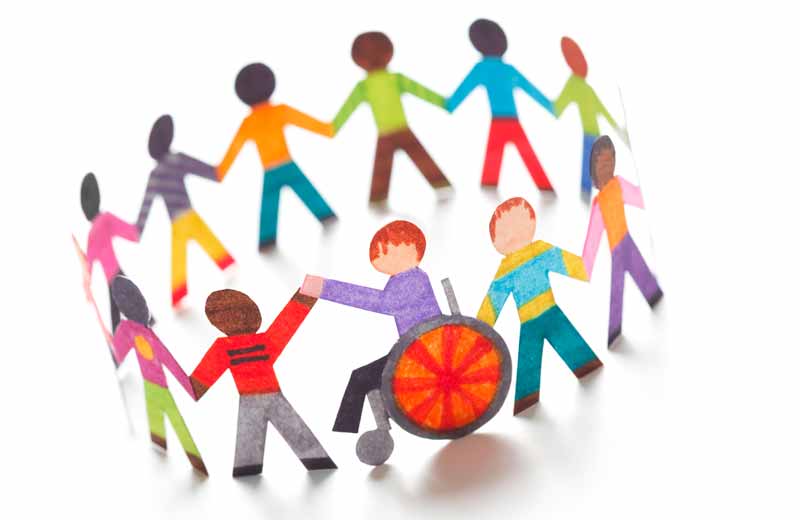
Inclusion is a massive topic. It is also a political and potentially contentious topic. There are layers of issues inter-connected in word which holds so much weight and value. The word encompasses so many different facets of what it means to be inclusive as an individual, an educator, a school and a society.

For this post, I am going to focus on how inclusive edu-twitter is.

Yesterday, I celebrated the women of twitter, the female ‘thought-leaders’ who influence educational discussion and debate on twitter. As I scrutinised the list (always provocative I know) of ‘big hitters’ (a deliberate choice of words as it is often used with reference to the male edu super stars who dominate the headlines) I realised there was a gap appearing.

When we started #WomenEd 5 years ago in April 2015, we scrutinised the male heavy discourse on Twitter, we noticed that articles and books about education had a face that fitted, that of a white, straight male.

As I went through my list of women with ‘big’ twitter followings, I realised that whilst I was celebrating the amplification of female voices, I was also challenging the lack of visible diversity in this group. The female ‘big-hitters’ are visibly not that diverse. I will emphasise the word visible as we often judge whether something is diverse by our visible assumptions and race is prioritised but in the Equalities Act there are 9 protected characteristics and they are not all identifiable by the naked human eye, especially when the lens is the information shared in a twitter profile photo/ bio.

For my exploration I focused on women in education with over 20k (I had to pick a number as an indicator) followers and I spotlighted these 10 women who I follow, admire and have been inspired and empowered by:

I hope I did not unintentionally make anyone feel uncomfortable by being on this ‘list’ as they do cause controversy. I also hope I did not upset anyone as I missed lots of women off who could have been included in this somewhat arbitrary category too who were suggested by others, some of whom I regularly engage with and know quite well:

So although I was celebrating that more female voices and opinions are being shared and heard, and that this has noticeably increased in the last 5 years, I was also critiquing that more diverse female voices and opinions are needed.

I was given challenge by my #PLN as one would assume… What does it matter? What does ‘big-hitter’ even mean? Why 20k? Does number of followers really equate to impact?

I watched the conversation unfold and I would encourage you to read this thread and be curious about the comments from a diverse group of educators: https://twitter.com/Ethical_Leader/status/1255370430891917316?s=20

The bottom line is that it is not that diverse female voices are not present, they are there, I follow some brilliant educators who represent many different backgrounds, experiences and identities, but the bigger questions are: Why are these diverse women not visible? Why are these diverse female voices not being heard?

A number of different arguments and reasons were shared explaining why this might be. A good friend asked me to check how long my ‘top 10’ had been active on twitter and how many tweets they have sent to show their engagement. I know my following has grown over the years, my reach has been extended, as I tweet, blog and speak at events a lot, I am very (some would say too) engaged with my #PLN. I also try to follow everyone back so that each follower feels that their voice, ideas and opinions are important to me too.

I have not come to any solid conclusions, as this was not an exact science and needs someone to properly research it and scrutinise the data available, but I would invite you to consider: How inclusive is your #PLN?

We are influenced and shaped by the people we choose to have in our circles. Our personal, professional and virtual connections impact us consciously and unconsciously. Let’s make sure that our spheres of influence are diverse and inclusive, representative of our communities. Or we will fall prey to ‘group-think’ and we will remain in a bubble.

#DailyWritingChallenge #Inclusion

I would also encourage you to consider that it is hard to think about inclusion without thinking about representation too:

noun. the action of speaking or acting on behalf of someone or the state of being so represented.

I scrutinise representation, or the lack of, a lot. I look at timelines, event line ups, panellists and committees and think: Did they not sense check this? Who thought it was okay to have an all-white line up? Who thought it was okay to have an all-male line-up?

It doesn’t mean that I always get it right, not for want of trying.

I am involved in a number of diversity groups, projects and initiatives. I have been involved in the conversation for several years. I find it staggering that we are not making more progress. So perhaps we need a new list… the diverse voices who should be ‘big-hitters’ on twitter.

#DailyWritingChallenge Day 33: Love

Love encompasses a range of strong and positive emotional and mental states, from the most sublime virtue or good habit, the deepest interpersonal affection and to the simplest pleasure.

What have I loved about lockdown?

I have loved being at home and cooking more… I have loved slowing down and being still, quiet… I have loved weeding the garden… I have loved talking to friends and family more often… I have loved writing a blog every day for #DailyWritingChallenge… I have loved sending hand-written (scrawled!) rainbow cards to loved ones… I have loved not wearing make-up every day… I have loved reading and researching for my MA assignment on #FlexibleWorking… I have loved supporting women through our peer support circles… I have loved contributing to #BrewEdIsolation… I have loved the sense of community… I have loved hearing from old friends… I have loved watching my garden bloom… I have loved planning my business, and inputting on the design of my branding and website… I have loved zoom birthday parties and drinks… I have loved not driving every day… I have loved the positivity on Twitter… I have loved listening to music… I have loved the #RainbowsOfHope… I have loved tidying my garage… I have loved chatting to neighbours (whilst standing at a social-distance!)… I have loved learning online – training with Connecting Classrooms, Best Practice Network and Resilient Leadership Elements… I have loved reflecting and thinking lots… I have loved listening to the birds in the morning… I have loved my daily walks… I have loved connecting with new people and forming new friendships…

Who knew there would be so much to love in the time of lock-down?

#DailyWritingChallenge #Love

#DailyWritingChallenge Day 32: Wisdom

Wisdom, sapience, or sagacity is the ability to think and act using knowledge, experience, understanding, common sense and insight. Wisdom is associated with attributes such as unbiased judgment, compassion, experiential self-knowledge, self-transcendence and non-attachment, and virtues such as ethics and benevolence. 

What does it mean to be wise?

My parents are both wise, they are: Worldly, Intelligent and Insightful, Sensible, Experienced and Ethical. They might not have many bits of paper to their name validating their knowledge, but they have taught my sister and I a lot about life, about how to be a good human.

Worldly:

I was lucky to travel a lot as child – my parents were both self-employed, they worked hard, ran successful businesses and did up a house. This enabled them to reward themselves with great holidays. My parents are quite young (I am 41 and they are only now 61 and 64) and my Dad is an adventurer, so our holidays always involved skiing, mountain biking or safari-type activities. Dad does not like to sit down, to Mum’s despair who would love to lie on a beach and a ‘real’ holiday! Growing up and developing that world view has made me a passionate travelling, I love exploring new cultures.

Intelligence and Insight:

I may be the one in our family with the BA Hons in Post Colonial Literature but my parents are the ones with the life experience. They can both beat me at Scrabble, Chess and Trivia Pursuit! My Dad’s specialist subjects are politics, history and the natural world, my Mum’s are children, cooking and gardening. Both have a business brain and are entrepreneurial. My parents taught us a lot of practical skills, encouraged us to be readers, to be curious and they made us emotionally intelligent too.

Sensible:

If being WISE means you are ‘sensible’ all the time then my parents may fail at this one. They can of course be serious, sensible and responsible, but they do not themselves too seriously – they taught my sister and I to be able to laugh at ourselves. Although I am the Saffy (AbFab) of the family and I am usually teased for being the ‘square’ one to be fair! I guess on reflection they taught us when to be sensible and when it is appropriate to let your hair down and have a laugh too.

Experience and Ethics:

We are not a religious family, I am christened but my sister is not (long story about the Grandmothers falling out at key events!), but we do have a strong moral compass. Mum and Dad have a strong sense of right from wrong and instilled that in us. They had a firm but fair parenting style, we have a very open relationship, we had few rules growing up but we respected the boundaries and did the right thing, most of the time. Sharing experiences as they happened, we were exposed to lots of things like conversations about finances that kept us grounded.

Saying I am a wise person, seems like an odd thing to say. It is one of those words that we say about others, rather than about ourselves isn’t it? My parents are wise and give good advice, which is a quality I know I have developed too, I am someone who people seek advice from, so I guess I am wise too.

#DailyWritingChallenge #Wisdom