Perseverance is not giving up. It is persistence and tenacity, the effort required to do something and keep doing it until the end, even if it’s hard. Perseverance originally comes from the Latin perseverantia and means to abide by something strictly.
How perseverant am I? I like to think I am a persistent and an a tenacious person so why can’t think of any examples this morning? And am I as perseverant in my personal life as I am in my professional life?
Success comes from curiosity, concentration, perseverance and self-criticism. Albert Einstein
I know I tend to get a bit between my teeth, I am a dog with a bone – I don’t give up very easily.
I know I am stubborn with my purpose – I persist on my mission.
I know I am positive, optimistic and determined – I am not easily defeated.
I also know I am not a very patient person, but I am very perseverant when I have a goal – a destination in my focus.
I know I am a project manager – my strong work ethic tends to give me the momentum to propel me through.
Our greatest glory is not in never failing, but in rising every time we fail. Confucius.
I know I have had a successful career and my tenacity, underpinned by my resilience, has empowered me to survive several struggles.
I don’t consider things that go wrong as failures, each challenge has been an opportunity to reflect, to grow, to reframe and to redirect.
I know I have had some setbacks, as we all do.
I have been called a phoenix by friends on a few occasions.
Does my sassiness upset you?
Did you want to see me broken?
I rise, I rise, I rise.
Maya Angelou
I have risen a few times – I always seem to land on my feet.
Am I lucky? Or has my hard work, my persistence and my perseverance looked after me in my life?
I know I will keep going, until the end, even when it is hard. Much like the endurance needed for the lock down challenge.
Family has always been hugely important to me, whether it be my blood relatives, my friends or my school family. The word family means something special and individual to us all and it certainly is not a one size fits all. I love hearing about how families are made up, uniquely for us all making us all individuals.
For me family isn’t always about blood connections, it can sometimes be achieved by the way people make us feel in their company. For example, lots of us grow up referring to family friends as ‘Aunties’ or ‘Uncles’ because they are close family friends. I love this sense of connection that draws us all together and think it’s important to seek out these human bonds where they exist throughout our lives, family makes us richer as people after all.
Family values in action
Since becoming a Mum to twins in 2019, I have really reflected on how I now build a family for my daughters so that they feel loved, safe and that they belong. I know how important this is for their growth and security as they grow-up and like every parent, I want the very best for them. But how do we build strong family values?
Family in 2020
Having a young family in the current climate is certainly sometimes daunting to say the least but the climate has made me think about our family values. Faced with the pandemic currently, family is really important to us all and for some of us, we are probably spending more time than we have ever spent with our loved ones but less so with others that form our family. Whilst it is a very stressful time, it is also a warm and close time for many of us which is a fantastic thing and will certainly be allowing us all time to reflect on what family means to us all.
This isn’t about us saying ‘I’ve got this sorted’ because nobody has all of the time. What I think this climate does though is it makes us appreciate our families a little more each day, allowing us to take time to notice what surrounds us and being thankful. Something we all have to remind ourselves to do every now and then when life becomes busy. Perhaps a national ‘family appreciation day’ would help us do this as a nation.
It has also made me think about how we connect with our families and despite living in a technological rich world, we don’t always use technology in the best way to make us connect with our families as often as we could. In fact, we are often too entrenched in technology, including social media, to notice just how wonderful our families are that surround us and how ‘rich’ they make us.
The current pace of life makes me reminisce back to my childhood. Life was certainly much slower paced in the 1980s! Similar to now, we did shop locally, talk to our neighbours a lot and spend a lot of time at home. I wonder if after this pandemic we will begin to see life change once again and focus more on our local communities?
The current climate also makes me think back to 2005 when I was lucky enough to be part of a life changing expedition to Malealea in Lesotho.
Taking 30 children to complete aid work after raising £50,000 through fundraising, I kept a journal whilst visiting this wonderful country and it also gave me an insight into their family life. I have read parts of this journal recently, similar to living through this pandemic, it was life changing for me. I wrote about the importance of family values. I could see how important the values were in this community shown through their:
Rich time spent together as families
Openness to share and welcome others to their homes
Strong sense of community
So, how do we ensure our children learn these family values living in the 21st century?
Well for me as a starting point, it’s about us:
Retelling stories about life in in a pandemic
Writing blogs like this
Taking pictures and videos of significant events and memories e.g. food parcels delivered, NHS street claps etc…
Ensuring we instil the family values we are drawing from this pandemic into all we do every day and reflect continually about the joys family life gives us regularly.
I honestly feel living through this pandemic we have a chance here to re-establish our family values. We have to ensure the future generations understand what this pandemic has done to strengthen our families in this busy world we live in. Whilst it has left many of us estranged for the short-term, how connected were we before? If you genuinely were, great keep it going, but if like me you took some aspects of family life for granted – don’t, stop and think a bit.
We have to remember that when we do connect with our family through these times, we genuinely care about how they are, we are looking out for them through tough times similar to how families I have met whilst in Malealea. I was in awe of them as their family values were so clear to see.
As a new Mum, I want to ensure my children grow up appreciating the small things in life and family is the best place to start this. I hope to keep this up but re-reading blogs like these will be a great reminder to me and a fantastic piece of history made by everyone, so I want to thank my twitter ‘family’ for providing me and my children with this opportunity because without these blogs, it’s easy to forget the richness our family can provide to us all every day and never so much as they do right now.
Creativity is a phenomenonwhereby something new and somehow valuable is formed. The created item may be intangible or a physical object. Creativity is our cognitive ability to find connections, rules and patterns to create new, original ideas and identify possibilities.
Creativity and innovation are two of the top ten key skills for future employability according to the World Economic Forum.
Not everyone is an artist, but we can all be creative.
I would love to be talented as a singer, a dancer, an actor or a musician but I am not. I am an appreciator of The Arts, I love reading books, watching films, visiting galleries, viewing photography, going to the theatre. I appreciate artistic talent and like things to be aesthetically pleasing.
When I am travelling I always seek out the street art. I lost myself for days wondering the streets of various places in South America, admiring and photographing the vibrant murals painted on houses. The blasts of colour splashed across each architectural canvas made me smile and lifted my spirits.
So what does being creative mean to me?
I am a creative thinker – I think outside of the box, I push boundaries and I enjoy disrupting the status quo. I think best in the shower, it is where I incubate my ideas. I also love allowing my mind to wander on long drives. I have planned many a project and realised many an idea driving down the M4 and M5 back to Devon!
I have a vivid imagination – I am a visual person and I dream in technicolour. I like originality, things that break the mould, people that stand out. I get a buzz from being inventive – my mind is fertile so I always carry a note book, I have pages and pages of ideas and brainstorming for projects, events, blogs and ideas I want to explore.
“A creative life is an amplified life.” ~Elizabeth Gilbert
I am resourceful – I have had many a job where the school has been in deficit and my budget for a project is zero. This does not hold me back, I find a route to my desired destination in a creative way.
I am innovative – whether it is pioneering new ideas or trail blazing new directions, I am happy to break away from the pack and innovate traditions.
I experiment – I don’t mind making mistakes. I am happy to try new ideas, new things and make up my own mind. I will try most things one.
“Creativity takes courage.” ~Henry Matisse
Creativity for me is a range of intentions and actions which require time, energy and space to grow:
Creativity is great for our well-being as it nourishes our soul. I have found the daily practice of writing has been a great creative outlet for me during lock down. The self-expression has helped to explore, capture and anchor my ideas – the #DailyWritingChallenge has helped me find greater clarity about what I need for my peace, healing and happiness.
Being creative each day has helped me tune in to my inner voice, I am a connector and the writing has enhanced my sense of self-connection.
Creativity has helped me to: be more present in the moment, connect with my heart, make sense of some things I needed to process, explore what I am curious about.
“You can’t use up creativity. The more you use, the more you have.” ~Maya Angelou
A community is a social unit with commonality such as norms, religion, values, customs, or identity. Communities may share a sense of place situated in a given geographical area or in virtual space through communication platforms.
One of the #SilverLinings of #Covid19 for me is to witness the strengthening of community identity through connectivity and collaboration. There is a real sense that we are in this together, and that we have collective responsibility to stay at home and a shared vision to stay safe and reduce the death toll. Some of the community initiatives that have arisen have really pulled at my heart strings, good people doing good things for good reasons to help others.
We have two hands, one for helping ourselves, one for helping others.
My Real-time Community:
I was brought up in North Devon, in a semi-rural community. Mum owned and ran a massive nursery school and Dad is in farming. They are fully embedded in the local community – in fact Mum changed the nappies of most of the 30 somethings in our home town! As a family we are good with names and faces, so we are constantly bumping into people who we know when we are out and about. Going to university in Canterbury, I lived and worked in local bars and restaurants for 6 years, so I not only got to know the student community but I also became embedded in the local community of this lovely city. Moving to London was a shock. For over a decade I didn’t really know my neighbours, I didn’t have a local pub nor a local shop – I didn’t really see people I recognised as I went about my daily life. Moving to Oxfordshire, buying a house and growing roots, I have consciously planted seeds and nurtured relationships in the local community. Co-founding the Oxon MH & WB network with Lucinda, and co-founding the Oxfordshire Women Leader’s network with the wonderful OWLs has forged new friendships regionally, and out of education. I also am now friends with some of my neighbours. Being part of a community is an anchor during this strange shared experience.
MyVirtual Communities:
Co-founding #WomenEd 5 years ago at Easter, we didn’t quite anticipate the scale of the community we were going to grow, nor the power of the connections and relationships that the community would form. Through my work in establishing and growing that community, I have then also been involved in #BAMEed and #LGBTed which led to me founding #DiverseEd following a conversation with my friend and former DHT, Bennie Kara. I have then fallen into the #LeanIn community too, which is a whole different scale of global connections for me! For me what is special about virtual communities is when they spill into real-time and these friendships are nurtured offline.
#DailyWritingChallenge #Community
My Education Community:
Teaching is a special vocation as we bond in the collective endeavour. People go into teaching with purpose and heart, committed to doing their bit for others, driven by their values. I feel that #Covid19 has elevated the profession in many ways and spotlighted how important educators are. There has been less competition and more collaboration across the system. It has felt like we are a united community, when it can often feel quite divided. I hope that we can hold on to being one community moving forwards.
My Overseas Communities:
Over the last 20 years I have spent time volunteering overseas on educational and community projects in my summer breaks. I have had the privilege of living in and working alongside remote communities in Ghana, Tanzania, Mozambique and I was due to go to Rwanda this summer. I like to travel this way, so that I am giving back, rather than staying in a hotel, in luxury, and not meeting people from the local community. Through social media we stay in touch with the other volunteers, both home and international. Volunteering is a bonding experience for everyone involved as you have a sense of collective purpose and shared values.
My Lock Down Communities:
During lock down I have started, unintentionally, two new communities: we have 30 women in our peer support community, and we have 70 bloggers in our #DailyWritingChallenge community – both groups have kept me anchored and uplifted throughout the last month. Along with Angie’s burgeoning community in The NourishEd Collective which on reflection is a hybrid of them both – a community on mighty network, of women in education who are sharing their personal stories on identity. I owe a lot to my virtual communities for the strength, energy and inspiration I get from them – Twitter especially. This weekend I am part of the #BrewEdIsolation community – we have 30+ contributors connecting ideas and people all day on a range of themes.
A sense of community, a sense of connection, a sense of belonging is a sense of hope for many of us right now. It is reassuring to know that we are in this together and that we are stronger together.
A ritual is a ceremony or action performed in a customary way. … We also call the ceremony itself a ritual. Although it comes from religious ceremonies, ritual can also be used for any time-honored tradition, like the Superbowl, or Mardi Gras, or Sunday morning pancake breakfast.
What is the difference between a routine and a ritual?
For me a routine are those daily habits that we perform unconsciously, the things we are programmed like robots to do: we shower, we brush our teeth, we dress, we brush our hair, we eat breakfast, we put our shoes on, we travel to work. We do these things on auto-pilot, we hit each repeat each day.
By contrast a ritual involves the things we do to nourish our soul. The things we choose to do: meditation, mindfulness, yoga, journalling, massages, baths and gratitude logs. We do these things mindfully, we do these things consciously.
Before-Covid my rituals were my monthly self-care activities like going for an acupuncture session, for a massage, for a spa day, for a hair cut. A mid-week G&T and a bath if I had a bad day. Most of these rituals have a price tag.
Mid-Covid my rituals are my daily self-care practices. My morning starts early each day with a glass of water, a coffee and sitting contemplating the theme of the day. I open all of the doors and the windows and let the outside in. I love the fresh air and the sound of nature filling my lounge. My brain wakes up as I tap on my key board and reflect.
I make my own lunch, fresh each day – I have cooked more in the last 4 weeks than I have in the last 4 years. After lunch I lie on my Shakti mat and feel my spine align. At the end of each day in the home office I go for a walk in the sunshine.
Each night I speak to one of my peer support circles and connect with phenomenal women. We talk about life, how we are feeling, how we are coping, what we are exploring.
#DailyWritingChallenge #Rituals
I go to bed religiously at 10pm each night, normally after a G&T, sometimes after a bath.
Weekly I go to the local farm shop and fill my fridge up with vibrant colours. I go to the Post Office and post the cards I have written to loved ones that week.
Each Saturday I clean my house (when I was promoted to AHT 10 years ago I started paying for a weekly cleaner) and there is something quite satisfying in that.
On the weekends I read, I garden and I listen too music. I light candles and I sit and think. I pass time idly away. I potter.
My days and my weeks have found a new rhythm. I feel calm. I enjoy the stillness and the quietness. In some ways it feels like we are on a spiritual or a meditative retreat, but this one is free.
Post-Covid, I am hopeful that these new habits and intentional rituals will be embedded and will remain to punctuate my day, replacing the exclamation marks of before with the ellipses of today.
noun. a particular attitude towards or way of regarding something; a point of view.
Reframing is a technique used in therapy to help create a different way of looking at a situation, person, or relationship by changing its meaning. Also referred to as cognitive reframing, it’s a strategy therapists often used to help clients look at situations from a slightly different perspective.
Perspectives have shifted, will shift and need to shift. We are experiencing a shift in everything we know, and everything we thought was constant. So how we see things, how we think and feel about things need to change too.
This storm has come to disrupt our lives, to teach us a lesson about humanity, it is clearing a path for us. We need to listen to and learn from this experience.
I am not someone who feels fear very often, things do not tend to hold me back, but I am afraid that humanity will just go back to how it was, that we will resume our lives as they were BC (before Covid) when PC (Post Covid) could be a very different world.
If we reframe how we view the current crisis, we can then consciously reset it. In the last few weeks, we as humans have gone back to ‘factory settings’ so to speak. We have removed all of the apps, all of the notifications and we have removed the white noise from our lives.
If we change the way we look at things, then the things we look at change.
We are not being punished, we are receiving a gift.
We have been given an opportunity – an opportunity to do things differently, an opportunity to be different.
I am a cup half-full rather than a cup half-empty person. My cup is filling up with Time, Stillness, Slowness, Space – the things I do not prioritise in my normally busy, fast, full life.
I don’t know how or when I started to reframe things as a habit, perhaps as a friend said this week it is because I have been involved in a lot of coaching conversations throughout my career. It is a technique we use to shift how we see things. We go below the surface and delve deep into what is really going on, rather than what we think is going on.
Through coaching I have identified, articulated and strengthened my core values and my sense of self. I have found that authentic sweet spot.
I don’t allow negative self-talk to affect me, I am secure in who I am. I no longer allow negative external talk to affect me either as I used to take it personally. Especially when the criticism seemed unjust.
As a young leader I was given a pearl of wisdom in my formative years by a line manager:
You receive a lot of criticism from your peers because you are a disruptor, you are challenging the equilibrium. You are ruffling their feathers and (unintentionally) showing them up, so they are criticising you. You are prepared to put your head above the parapet, so you will get more shots aimed at you. Reframe the criticism as praise, each time they criticise you, they are celebrating the change you are leading.
This was a game changer for me. A penny suddenly dropped. This advice also became my shield, my protective outer layer.
Reframing – what we think… what we feel… what we say… is a powerful process. It empowers us to take control back.
Consider some of these reframes and see if there are negative statements you hear yourself saying or thinking which you can consciously reframe through a more positive lens:
I can’t do it – I can’t do it, yet.
I am a mess – I am human.
I am a failure – I am a work in progress.
Why is this happening? – What is this teaching me?
I’m scared – I’m scared but I will try.
This is too much – One thing at a time.
I can’t handle this – I don’t have to do this alone.
A positive, can-do attitude is powerful. I have worked with many colleagues who preach a growth mindset approach for our children, but they do not practise it for themselves.
A good way to start feeling more positive is to actively celebrate each night everything you have achieved that day, everything you are grateful for, instead of punishing yourself for everything you have not done. This gratitude practice will serve you better.
Another healthy daily ritual is a morning affirmation, a mantra that you repeat to yourself in the mirror to frame your day.
We also need to find our #SilverLinings in each situation we experience, we need to find the joy in those micro moments and hold on to our #RainbowsOfHope. I have mentioned in earlier blogs that I have reframed the pain of gardening leave, as my once-in-a-lifetime opportunity to travel in South America for 2 months, in term time, on a salary.
To be happy, we either need to change our situation, or we need to change our mindset about our situation – which links us back to our theme of Change yesterday.
Things I am consciously reframing in lockdown:
What brings me Joy?
How will I serve my Purpose?
What nourishes my Soul?
Who has been there for me?
How much money do I actually need to survive?
Am I a Teacher or an Educator?
What impact can I have from outside rather within the system?
Consider the intentions you will you put out to the Universe moving forwards. Consider how you will hold yourself, and others able and accountable.
Everything we hear is an opinion, not a fact. Everything we see is a perspective, not the truth.
noun. an act or process through which something becomes different.
I change my clothes every day… I changed a light bulb today… The spring is changing my garden day by day… Some people in my life never change…But I change how I feel about them… I am changing direction in my career… I am not someone to change my mind…
Change is a constant.
So why do we fear it? Why do we fight it?
C:
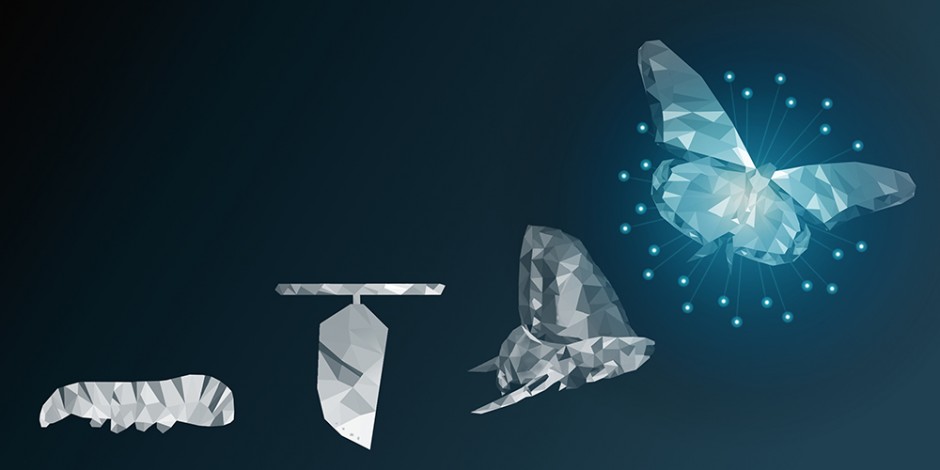
Change needs courage. Change is about relinquishing control. Change evokes compassion.
H:
Change is full of hope. Change brings happiness.
A:
Change is about adapting. Change needs to be accepted with a positive attitude.
N:
Change is letting in the new and saying goodbye to the negatives.
G:
Change is an opportunity to grow. Change is often listening to your gut.
E:
Change is something to explore, to experiment with and to embrace.
We need to reset and reframe how we see and how we experience change.
We need to seek change we can create, rather than to react to change we cannot control.
We need to change how we feel internally, so we that we can respond to change externally.
noun: wellbeing. the state of being comfortable, healthy, or happy.
Well-being, wellbeing, or wellness is the condition of an individual or group. A high level of well-being means that in some sense the individual’s or group’s condition is positive.
Being forced to stop, pause, reflect is highlighting that a lot of our well-intended well-being initiatives are about well-doing and not well-being.
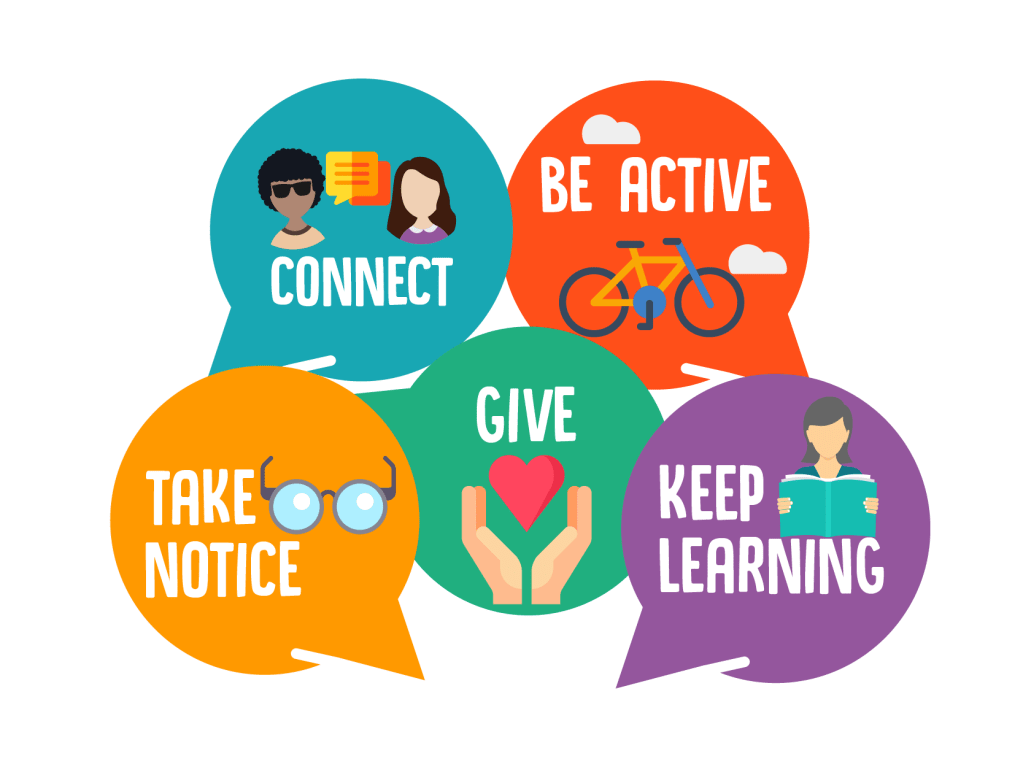
We have all seen the 5 ways to well-being, based on scientific evidence from the Government funded New Economics Foundation with the 5 simple action to improve well-being in every day life.
Connecting:
I am speaking to friends and family more regularly than ever before. I have reconnected with friends who live that bit further away or overseas. I have met some lovely new people through my giving.
Am I over-connecting? Do I have zoom-fatigue?
Giving:
I am gifting my mornings to help connect and grow a community of writers. I am giving my evenings to support a number of women through my facilitation of peer circles. I am off to hospital tomorrow to give as a volunteer in the vaccine trials.
Am I giving too much? I am depleting my energy reserves?
Learning:
I am learning lots about myself, about others and about content I will be delivering. I have completed several online courses for work that I will be doing in the summer term – the British Council’s Connecting Classrooms, NPQ online facilitation and Resilient Leadership.
Am I allowing my brain to have a break? What will the impact of this learning be?
Noticing:
I am noticing the birds in the mornings, the spring flowers on my walks and my garden coming into blossom. My senses seem to be heightened and I am even more sound and smell sensitive than before. I am enjoying my daily ritual of writing each morning. I am also noticing my feelings, the fatigue and the body aches.
Will I continue my daily rituals? Will I listen to my body as well as my mind?
Being Active:
I am walking regularly, exploring the local area. I am a high energy person but I do not really enjoy solo exercise, I am a team sport kind of person. A mobile mechanic has come and fixed my bike…. I really should start that online yoga class…
Will I finally join a sports team? Or return to weekly dance lessons?
I don’t want for anything, I have a roof over my head, food in my fridge, a garden to escape to, loved ones checking in on me. I am eating well, I am sleeping well – I am physically, mentally and emotionally well. But I am craving real time human connecting and physical touch.
I am wondering if there is an action missing now we are experiencing physical distancing? In theory you could do all 5 ways to well-being in social isolation, but that omits the human need for social relationships.
For me it is the social capital, the human connectivity, which makes me feel well – I prefer doing all 5 ways to well-being with others, not by myself. So I would encourage you to be mindful as you build lots of well-doing into your new routines and reflect on what it truly means to be well.
In ordinary circumstances, flexible working has become synonymous with working part time. In the current context, the associations relate more to the flexibility afforded by working from home.
The word flexibility is positively charged. It has connotations of personalisation, freedom and responsiveness. Indeed, I champion flexible working in the chapter I co-authored in the first WomenEd book: ‘Flexing Our Schools’. However, as with the health warning offered in the book regarding being duped into working full time on a part time salary, there’s also the potential for women to be short-changed by the premise of flexible, home-based working.
Don’t get me wrong, I appreciate the opportunity that this context allows me to blend my personal and professional existence: extra baby cuddles throughout the day; staying in my slippers; meeting with colleagues from the comfort of my home. Nevertheless, just as the space clear of debris visible from my web cam gives a distorted snapshot of my dining room, the flexible working argument rarely considers the full view of what home working actually entails.
The Instagram version is really quite appealing: minimalist, chic home office spaces, time for exercise, learning a foreign language and an impromptu coffee break in the garden. The family-friendly edition promises intercepting work with some nutritious home baking, wholesome crafting or collective jaunts in the fresh air.
In reality, my day working from home resembles a smorgasbord of incomplete domestic chores, mummy duties and work tasks all bleeding into a guilt-ridden mush. And that’s with a husband taking his share.
Many us may thrive on the ability to simultaneously answer emails, pacify a small person, rustle up lunch while conducting a video call. However, multi-tasking is a myth. All we can hope for is to be as efficient as possible at task switching. And maintaining this kind of precarious juggling act is exhausting.
It has been interesting following the #SLTchat slow chat regarding flexible working over the last few days. Many of the #flexappeal tweets indicate that household responsibilities have become less equal during the lockdown period. A number of women share their personal experience of having to squeeze their home working into short snatches of the day or night and take the lion’s share of prime caring responsibilities to allow their partners unadulterated time to work from home.
The working from home isn’t itself the issue, it’s all of the other unpaid work that needs to happen too, unless you have a nanny and maid to see to it (I can imagine that this would feel rather odd if you weren’t leaving the house). Attempting to achieve 12+ hours of childcare, 8 hours of professional work and 2 or more hours of household tasks over the course of a day doesn’t add up, however Tetris-like your schedule.
So when we consider what we can learn about flexible working in the current climate, as well as recognising the absurdity of presenteeism, meetings that could have been emails and forcing people to drive to a different building in order to complete their work simultaneously in isolation, we also need to appreciate the inevitability of mission creep when working without defined boundaries.
Today I crossed a few big ticket items off of my work to-do list but I’m conscious that I was an absent mum, despite physically being in the same space. The satisfaction achieved from the former was negated by the latter. Tomorrow I might achieve a greater sense of equilibrium but the fulcrum is forever shifting as the balance I’m attempting to achieve isn’t really tenable.
Working from home means different things to different people, depending on their circumstances. At the moment, for many of us, the concept involves attempting to achieve two full time roles simultaneously. That’s not flexible working, it’s an impossible feat of contortionism.
I’m not a superhero, nor am I a magician. I think we all need to cut ourselves a bit of slack from our metaphorical capes and accept the impossibility of the current conditions we find ourselves in. We are attempting to work from home during a pandemic; this is not a true and realistic version of flexible working.
Flexible: adjective. capable of bending easily without breaking.
Flexibility: noun. willingness to change or compromise.
Flexible working: noun. Flexible working is a way of working that suits an employee’s needs, for example having flexible start and finish times, or working from home.
Flexibility is a core expectation of teachers. Schools, parents, colleagues and students expect us to be flexible. Flexibility is the foundation of effectively working with others. Relationships and partnerships cannot be nurtured, cannot thrive without some give and take.
As teachers we are flexible in changing how we think, how we plan, teach and assess as our profession is reformed. As professionals we are flexible in changing our responsibilities, our timetables and our duties to the needs of our school. As humans we are flexible in personalising, individualising and bespoking what we do to meet the specific needs of children.
So why is the system so inflexible for us?
The data on flexible working in schools says it all:
The UK has in excess of 250,000 qualified teachers, who are not working in our schools. They are qualified to teach but they have ‘chosen’ to leave the system. When you scrutinise the data further, the main demographic are women, women between 30-39, women who have had children.
In fact, they have not ‘chosen’ to leave, they have instead ‘chosen’ their families. They have ‘chosen’ to be a human, a parent, first and a teacher second. Choice suggests there was some freedom in the decision-making, when in fact their hands were tied. They were handcuffed into making a choice between the conflict of their heads and their hearts.
The dominant rhetoric is that on returning from MAT leave, lots of parents and carers are given the ultimatum – come back full time or you lose your TLR. Or yes you can go part-time but your TLR will be split to reflect this as if you are on a 0.6 FTE contract then you will only be doing 60% of your leadership responsibility. Neither seem very fair to me.
Another interesting piece of data is that if you mention in a job advert that you will consider flexible working relationships in your school, then you receive 74% more applications. Just by mentioning flexibility you attract a different talent pool.
One of the most thought-provoking professional learning opportunities I have attended was a #WomenEd event I co-arranged with EdVal. On a Saturday a few Junes ago, they trained 100 women on the principles of timetabling. The Timetabler in a school is often from a certain demographic, and to stereotype, also from a particular subject suite. This training empowered women in leadership who perhaps had not considered timetabling as a career route to understand the principles. More importantly it empowered them to know how to challenge The Timetabler and make a timetable work for flexible working requests.
Being inflexible forces people to choose. Being inflexible forces teachers to leave.
We need to stop saying our ‘recruitment crisis’ in teaching and we need to reframe it and call it what it is, a ‘retention crisis’. We recruit and train teachers, but our attrition rates for early career teachers are embarrassingly poor, and this is further compounded by our shocking retention rates for established, committed professionals.
Last month, in 9 minutes our profession was changed. In 9 minutes everyone was expected to work remotely, to work flexibly. In 9 minutes the business cases for why schools cannot enable flexible teaching arrangements also exploded.
There is concern that the pandemic will further exasperate gender inequalities. With presenteeism and visibility being part of the unconscious bias of who is being the most productive, how can women be present and visible when they are picking up the additional responsibilities of home schooling and the increased domestic demands being placed on families?
I am wondering what allowances schools are making for their staff-parents and carers, for parent-teachers, for single-parent teachers? I am also wondering if schools have re-written HR documents such as flexible working/ remote working policies?
If one good thing comes out of this pandemic, it is that schools have embraced flexible teaching and remote working arrangements. The workforce has shown that it is doable. If teachers can be flexible and flip their thinking and their delivery overnight, then we need the system to be as flexible for them in exchange.
I am very hopeful that when we return to school that school leaders, school governors and school timetablers will bring their new learning about how they flexed their schools in a crisis to the forefront of innovating our profession. It would be such a shame and real a missed opportunity for change, if when the pandemic is over, we resume to our traditional practices and inflexible mindsets.
Flexible working in schools, flexible teaching, is not just for a crisis, it is for life.
If we committed to enabling flexible working in our schools we potentially have a talent pool of 250,000 who may be encouraged to return to do what they are trained to do, teach our children, but to do so on their terms. So let’s take advantage of this opportunity to flip the narrative, to rewrite the script and to model that flexible working is wholly possible as a teaching workforce.
Teachers are capable of bending easily without breaking, but we need to fix the leaky talent pipeline in our schools. Teachers are willing to change or compromise, but are our schools? Flexible working is a way of working that suits an employee’s needs, we need to stop putting school’s’ needs ahead of teachers’ needs.








 Ethical_Leader