
#MonthlyWritingChallenge: Impact

Noun. the action of one object coming forcibly into contact with another; a marked effect or influence.

Verb. come into forcible contact with another object; have a strong effect on someone or something.

When I think of impact I reflect on the gap between the intent and the reality. A lot of people want to make an impact, to have an impact, to create a legacy of impact, but many fall short. We need to reflect on why this is. Throughout my career I have learned as much from impactful leaders as I have from leaders who have little or no impact. Observing leaders who fail to have impact can be uncomfortable to observe and experience, but we can also ensure that we do not repeat the same mistakes.

Who or what comes to mind when you reflect on:

  • The impact of great leadership and positive role models?
  • The impact of poor leadership and negative role models?

My reflection: I have had had some brilliant line managers in my career who have shaped me as a leader: Pam my HOD when I was a NQT, Rob my VP when I was AP and Andy my EHT all had a lasting effect on my and I have absorbed some of their ways of being and ways of doing into my leadership repertoire. I won’t name the poor leaders I have experienced but that list is a lot longer! Line managers who have taught me how I don’t want to lead and how I don’t want to be led. The leaders who were not impactful in their roles, had a negative impact on my wellbeing and job satisfaction, but they still made me a better leader as they made me more resilient, more robust, more determined.

When I consider why this is, I go back to leadership change theory and strategic thinking. Impact needs to be intentional, deliberate and by design; instead of being by luck or by chance. The desired impact of a policy, practice or project needs to be built into the plan, the impact needs to be evaluated throughout to inform the course of action. To have lasting impact we need to think and behave in the macro/ think in the long term to ensure that what is initiated, is implemented and institutionalised to become embedded, to form legacy.

Firstly we need to be clear on:

Who or what do we want to impact? And more importantly, why the impact is desired?

  • Impact on self
  • Impact on others
  • Impact on our environment

My reflection: I have spent a lot of time in the last few years, ensuring that I feature on my radar as well as others. As a servant leader, my previous roles have become all-consuming as I have been focused on the impact on others, but I have not observed/ or I have chosen to ignore the impact it has had on me. Heightening our sense of self-awareness enables us to be reflective and to rebalance when things become pressurised and stressful; considering how we impact others enables us to modify our behaviours and temper our language to be intentional about how things land; being aware of our environment enables us to leverage the processes and the people around us to both frame and contextualise our impact.

As Leaders How Do We Make an Impact?

Our individual and collective impact can be broken down into 3 categories of behaviour:

  1. What I/we say
  2. What I/we do
  3. What I/we pay attention to

My reflection: I am a direct person and my candour can sometimes seem abrasive, I have been working on intentionally filtering and softening my messaging when considering my audience and how they need to hear what I want to say. I am a confident, empowered and assertive person and this can often intimidate others, and I sometimes bring out the worse in others as I trigger their insecurities; I have become resilient to disrupting the status quo and making myself unpopular in the process. I have a strong sense of my ethical code and my values guide my focus and where I invest my time, energy and resource. I am tenacious in what I commit to and I know this can be wearing for others at times.

As Leaders How Do We Increase Our Impact?

I read an article recently about the ‘Circle of Impact’ and it broke it down into 3 pillars, with 3 connectors:

  • Vision, Values, Purpose
  • Structures, Ideas, Relationships

My reflection: creating a strategy for our impact is key. As a school leader my vision was often shaped by the organisation I was working for and the role I was being paid to do, but the values I brought to that role individualised it and that is where I humanised the impact I had as an individual. I am a purposeful and passionate person who has impact through my hard work and my drive for success, but I have also had impact through influencing others. Pioneering ideas, nurturing relationships and harnessing the structural mechanisms of the organisation have enabled me to maximise my impact. Stepping out of the system and leading in the grassroots space and now independently has made me consider the impact I want to have and how I will strategise it, communicate it and evaluate it from a different leverage point.

Many leaders have the intent to have impact, but they do not have the clarity of direction, the strategic vision, the leadership presence to realise this intent. When considering the impact we have, we have had and we want to have, we can distill down the behaviours and actions that have served us as leaders and enabled us to have impact. We are often quick to judge others and can see the gaps in leaders around us, but by self-scrutinising we can learn from previous successes and failures to maximise our impact moving forwards.

My final thoughts on impact are how we articulate it. In my #IamRemarkable sessions I emphasise how we evidence our successes and demonstrate our impact. We need to consider the qualitative and quantitative ways we can substantiate and exemplify the impact we have as a leader and gather the evidence as we go so we weave it into our leadership narratives and the story we share with others about the leaders we are and the impact we have.
#ResilientWomenLeaders

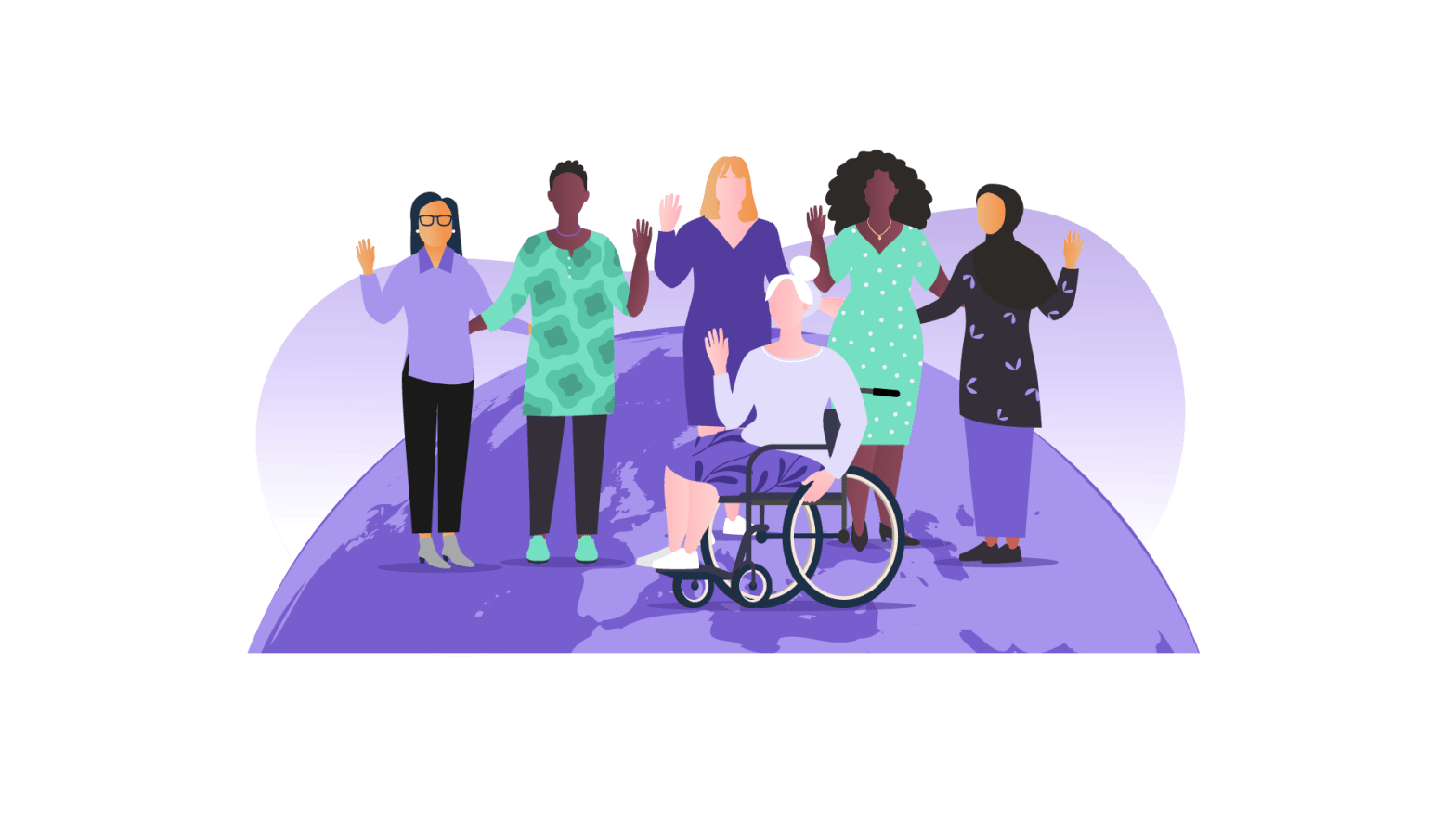
This morning we hosted our first in a series of events to celebrate #IWD2021. I was joined by 4 of my fellow consultant coaches form the Resilient Leaders Elements community for our empowerment event – Audrey, Isa, Skye and Yamina. Each speaker unpacked one of the elements that forms the foundations of our RLE coaching framework. This year’s theme is #ChooseToChallenge and each speaker shared what they had chosen to challenge and the impact this had had on them, both personally and professionally.

First up was Audrey, who explored the element of Clarity of Direction, which is underpinned by the facets of Strategic Intent, Unifying Purpose and Determination. Audrey shared the journey she has been on in reidentifying her professional goals and reframing her personal identity since leaving headship. She was courageous in her open and honest narrative about being in the fog, and she shared the steps that she took to move forwards and identify a new goal. Her Strategic Intent emerged as she focused on her strengths and the value she could add, her Unifying Purpose manifested as she sought feedback from others about where they saw her going, and her determination empowered her to navigate this period of uncertainty and to come out the other side stronger and clearer on who she is, and what she does.

Next up was Isa, who unpacked the element of Awareness, which is underpinned by the facets of Self, Others and Awareness. Isa deconstructed a global large scale project she had led in a formal role and modelled how she raised awareness across an organisation and with collaborative partners to empower 80,000 employees to volunteer in their local communities to pay it forward. Her awareness of Self was in how she had held a mirror up to the leaders who were driving this project forwards with their teams to understand how they showed up, her focus on Others was on engaging the leaders in deploying their teams and the Environment was significant in the social responsibility aspect of this work.

Skye shared her story for Leadership Presence next, and this was special as it was the first time she had articulated her journey over the last few years. This element is underpinned by the facets of Authenticity, Serving and Intentional. She reflected on her journey as an officer serving in the British Army and her experiences as a medic being deployed to war zones. She moved on to share her intentional bridging career as a physiotherapist serving the soldiers who have been traumatised by war and later a rugby team. Throughout her story she surfaced her exploration of her authenticity as a woman in leadership, in male heavy domains and how this led to her identity crisis as a mother looking for a different lifestyle in fulfilling her purpose and career goals.

Lastly, we heard from Yamina who led us through a discovery about Resilient Decision Making and the underpinning facets of Creative, Robust and Versatile. Her story was raw as it is current and she is still processing it. She openly shared how she has grappled with the decision to make a big career decision. She reflected on how she was weighed up the pros and cons to make a robust decision. This resonated with many of the audience who are at crossroads in their journeys. Yamina shared how she tackled this situation and the reflective process through which she had deliberated to create the best outcome for herself, her family and her future. Her objective approach to this dilemma showed how we can approach problems and resolve them to find the solution that will enable us to be the best version of us.

Following the storytelling from each speaker who brought an element to life, we had breakout rooms to reflect on the shared learnings and we gathered the collective wisdom in the room. As we approached the end of our morning together we held a panel where the audience could follow up with questions to the speakers to help each other apply the RLE framework to their own personal and professional journeys. We finished with an individual commitment as we all made a #ChooseToChallenge pledge for 2021.

Thank you to our speakers for your radical candour. Thank you to our audience for your engagement. I left feeling inspired and empowered by you all!

#MonthlyWritingChallenge: Pride – an anonymous post

I grew up with a biblical interpretation of pride and have tried to steer clear from being a proudful person. It is not easy. How am supposed to feel when I have achieved something great against all odds?

My instinct is to feel proud and exclaim ‘Look at what I did!’ and post it on every social media platform. What could possibly be wrong with pride? The Strongest Strong’s Exhaustive Concordance of the Bible lists forty-nine occasions where pride appears in the Bible.

There are 14 different words that can also be translated as pride. Nevertheless, in all its usage it has been translated as negative. (I stand to be corrected).  Here are few examples:

New King James Version

I know your pride and the insolence of your heart, for you have come down to see the battle.” (1 Samuel 17:28)

But when his heart was lifted up, and his spirit was hardened in pride, he was deposed from his kingly throne, and they took his glory from him (Daniel 5:20)

Pride goes before destruction, and a haughty spirit before a fall. (Proverbs 16:18)

Using more modern Bible translations gives me greater clarity on the pitfalls of pride:

New International Version

 ‘I know how conceited you are and how wicked your heart is; you came down only to watch the battle.” (1 Samuel 17:28)

The Clear Word Bible

‘But when he became proud and stubborn, he also became insensitive and was removed from his throne and stripped of his glory’ (Daniel 5:20)

‘Pride leads to self-destruction and arrogance to a man’s downfall’ (Proverbs 16:18)

When my pride leads me to be conceited, stubborn, insensitive, self-destructive, and arrogant- then it is not helpful. I can be proud of my achievements and the achievements of others, but I also need to be sensitive with how I share that with others.

Pride in my achievements should acknowledge the contributions of others; that I did not make it on my own, but I made it because there was that someone who: had my back; who prayed for me or who gave me that encouraging text message, phone call or email. Acknowledging others in my achievements, safeguards against an arrogant and insensitive attitude.

#MonthlyWritingChallenge: Boundaries

Noun. A line which marks the limits of an area; a dividing line.

A fence. A perimeter. A border. A line. A limit.

Boundaries are problematic at the best of times but the last year has meant that work-life boundaries have blurred. The boundaries that once defined our personal and professional spaces – both physical and mental – have smudged into one. As we chase the light at the end of the tunnel and we emerge from a year of hibernating in our caves, it is an opportunity for us to reflect on the boundaries that we will need to not only survive but to also thrive in a new way of being as our lives resume.

How we look after ourselves, our commitment to our own wellbeing and self-care, is more important now than ever before. I reflect a lot on how well I establish and reinforce my boundaries – both personally and professionally. I review and reflect on the boundaries I have created and make sure they are communicated and respected. Our boundaries need to be healthy so that they serve us, so that they protect us.

“Setting boundaries is an act of love to yourself and an act of respect towards others”. Lisa Olivera

In my opinion, boundaries are not about being selfish, they are about self-preservation.

How I set my boundaries:

  • Being clear on what I value
  • Being clear on what I am responsible for
  • Being clear on what I need
  • Being clear on what I will honour

7 types of boundaries we need to establish and be aware of:

  1. Emotional – establishing inappropriate topics, rebuffing emotional dumping, refusing to have our emotions dismissed and being able to separate our own feelings from other people’s.
  2. Financial – establishing boundaries for lending, giving or donating money.
  3. Material – establishing boundaries around possessions and when they can be used, contracting how they are to be treated.
  4. Mental – establishing the freedom to have our own thoughts, beliefs, values and opinions.
  5. Moral – establishing what happens if someone compromises your values and challenges your moral compass.
  6. Physical – establishing expectations around proximity, touch, PDA, your personal space and comments you receive.
  7. Time/ Energy – establishing boundaries around time and lateness, communicating when to contact, agreeing on the transaction of favours and free labour.

Some of my boundaries that I have been reflecting on and that I have been reinforcing in the last year:

Emotional boundaries – I have a large group of friends (many of whom who are also educators) and I have a big network of professional contacts (many of whom have become friends over the years). As someone who listens and supports, who coaches and mentors, who is a ‘fixer’, I have to be really careful about my own emotional regulation. Self-regulation is necessary when you are co-regulating others. I am the friend and family member who is contacted when people need help, support and solutions but this can become energy draining if it is constant. I am getting much better at self-preservation and not always being available at the drop of a hat to pick up other people’s chimps.

Moral boundaries – I have strong core values which I will not compromise and I have a strong ethical code which is a non-negotiable. I say no and remove myself from situations, organisations and relationships which are not aligned with how I believe we should behave.

Time/ Energy boundaries – I am a driven and highly-productive person, I think and I work fast, I can multi-task multiple projects, I am generous with my resources but punctuality is one of my triggers. I have established ways of working about how many minutes I will wait for someone to join a zoom call before I log out and crack on with another piece of work. I know the activities and the people that boost my energy, I also know the activities and the people that drain my energy so I am careful to manage how I spend my time and energy.

Another way of looking at the boundaries we need to establish is to consider the different spheres of our lives.

Our personal boundaries are the line that establishes what is you and what is another. This line separate the outer from the inner, enabling us to own our inner space. Our personal boundaries inform the choices we make about who we let into our lives, who we let into our hearts.

Our professional boundaries are the line that establishes our role. This line clarifies our responsibilities and our remit. Our personal boundaries frame the relationships we establish and maintain in order to fulfil the role we hold.

Our communication boundaries are the line that establishes how and when we interact. This line empowers us to be in charge of own interactions, to own our feelings, to own our attitude and to own our energy.

For me boundaries are about making a conscious choice not to take on someone else’s stuff. A boundary is saying “No”. A boundary is saying “Stop”. A boundary is saying “Enough”. A boundary is saying “Goodbye”.

As an empath I reflect on why I need to create and reinforce my boundaries. Without boundaries I go into overwhelm, I feel overstretched, out of control and my energy reserves rapidly deplete. I am aware that I have a tendency of over-compensating for others so something I am trying to consciously do is to stop trying to fix everything and everyone. I am also intentionally holding myself back to encourage people to meet me halfway rather than me doing more of the work.

My #OneWord2021 is freedom and I have read a few articles about boundaries enabling us to feel free (when it may be interpreted they do the opposite) as they draw that line in the sand meaning:

“We have the freedom to fully feel the innate beauty of our innermost selves – the freedom to be who we truly are”. 

Some tips I have extracted from various articles on maintaining healthy boundaries include:

  • Increasing our self-awareness: noticing and observing our boundaries
  • Owning our responsibility: choosing the energy that flows in and out of our bodies/ our lives
  • Establishing our non-negotiables: communicating them to others so they are aware of them
  • Showing respect: speaking up when boundaries are tested and saying no when boundaries are ignored
  • Trusting ourselves: closely listening to our intuition
  • Safeguarding ourselves: putting ourselves first by creating balance and harmony in our lives
  • Asserting ourselves: recognising that boundaries are not fixed and evolve, so they need to be constantly revised and recommunicated

Some of the benefits of establishing better boundaries in my life:

  • Creating more space and time for me to prioritise what I need
  • Improving my self-esteem and increasing my sense of self
  • Conserving my personal energy and maximising my inner resources
  • Increasing my independence and creating a sense of personal agency

“Set your boundaries loud and clear, so that the world knows how to treat you”. Indrani Mukherjee

Valuing education has nothing to do with race – an Anonymous post

Despite all the effort and work around DEI, there are still far too many educators who are still not aware of their privilege and the pain their words can inflict on black students. Over the years I witnessed teachers,  white teachers, destroy the confidence of young black and brown children under the disguise of real talk.

I recently witnessed a grown man towering over young children, belting at the top of his voice that these young children, black and brown children, should be grateful for the education they have as if they’re the only ones who received this free education. This really triggered  me.

Why are some teachers too quick to remind  BAME children that they should be grateful for the education that they are receiving? As if this is not a privilege that is afforded to all children. This remembrance often comes after a black or brown child shows a lack an interest in education or the efforts of their teachers.

I wonder why it is easy for some teachers to forget irrespective of race or creed, children are children and they will always be children. This means they might feel lazy, they might disengage, become rebellious and challenge a system especially when they are not interested in being in a classroom. We know some of the young people we teach are disfranchised and find education boring and pointless.

However, BAME students are subjected to a barrage of belligerence, indifference and harshness simply because they are black  and brown. It they were white, they wouldn’t need to be reminded of the value of education in such a way that is so intertwined with their race. Valuing education has nothing to do with race.

I am no longer going to hold my tongue. I am tired of seeing a privileged person, who is in a position of power and authority, belittling a child and using the trauma and injustices they face as a black child to shame their behaviour. You are not going to victim blame and shame black and brown children in front of me. Their disengagement cannot be used to justify the actions of those in our society who other and dehumanise them. Stop deflecting blame, why don’t you shame the institutionally racist systems that you benefit from instead.

What really worries me is that most students will not share their experiences of being victims of racism with their parents. I often wonder why?

Is it because they know that their parents will complain and rock the boat? Or is it because they believe it is not even worth it because the system will not hold one of their own accountable?

So who is responsible for holding racist teachers accountable?

Their peers? Yes….but  they are probably like them.

Their colleagues? Yes……but this is halted by the perception of colleagues have of them. I hate it when you share a discriminatory experience with a colleague and they say “awwww not him/her but he/she is such a nice person” and then continue to make excuses for them.

Their line managers? Yes ……but  racist teachers probably won’t  show that side of themselves to their superiors.

The school? Yes…..but evidence is always needed and that burden often falls on a BAME teacher who might already be dealing  with unconscious or conscious bias, glass ceiling or a flawed and unrelenting institutionally racist system that is built to hold them hostage.

The truth is we are all responsible for holding racist teachers accountable.

I am tired of the performance social justice in education. 

I am tired of the pointless statement of solidarity with the plight of Black people.

I am tired of the hollow pledges, the reactionary and tick box CPD.

My message to some of our well intended school leaders is… please clean up your  house and get things in order! We are way past the time for lip service. DEI is too important, it is not a fad, it is a social responsibility that is essential in creating schools that are truly inclusive and fit for all.

#MonthlyWritingChallenge: Pride

noun. feeling of deep pleasure or satisfaction derived from one’s own achievements, the achievements of those with whom one is closely associated, or from qualities or possessions that are widely admired; consciousness of one’s own dignity.

verb. be especially proud of (a particular quality or skill).

There are so many angles on how we can unpack ‘pride’ so I have been mulling over how to capture my thinking for this one as I kept going off on tangents.

From 1st February it is UK LGBTQ+ History Month so there is an obvious thread to think about identity, sexual orientation and allyship.

I am keen for us to create workplace cultures where everyone can bring their whole self and where each individual can be visibly proud of their authentic self. In the wake of George Floyd’s murder, we have amplified the reflection on how physically and psychologically safe people of colour feel in our school system and in our society. But there are increasing concerns about the impact of lockdown on the LGBTQ+ community, especially if school is the safe space for young people to be themselves and their home environment is an unsafe one, or somewhere where they cannot be authentic.

This week it is also Place 2 Be’s Children’s Mental Health Week and the theme this year is ‘Express Yourself’ which also speaks directly to our sense of self, our ability to be authentic, our ability to communicate who we are.

As someone who is passionate about DEI and MHWB, I encourage people to think about the intersect between identity and wellbeing as there is research that shows that you are more likely to suffer from mental health issues if you have lived experience of a protected characteristic. In some cultures disabilities and especially mental health are stigmatised which creates additional barriers to identifying and supporting individuals who are suffering.

So for me when I reflect on pride it also leads me to reflecting on privilege. There are things I am proud of which perhaps have been easier things to achieve or overcome, because of my identity and upbringing.

Pride is sometimes also associated with ego. To be proud can be seen as a character vice rather than a character virtue. We can be proud of others, but to be proud of ourselves can be seen as bordering on arrogance.

I was facilitating an #IamRemarkable session yesterday morning with a group of brilliant women who inspired and empowered each other to consider the correlation between those who self-promote and those who get promoted. The session helps you to explore your relationship with your accomplishments and reflect on the story you tell about yourself or allow others to tell about you.

Many women and people of colour do not show pride in their accomplishments for fear of criticism and judgement, as the message from society to some groups of people is to be humble and modest. One of the key takeaways from the session is that “it is not bragging if it is based on facts”, encouraging us to own and celebrate our achievements, but to anchor them in evidence so that they are concrete.

Then there is the collective noun, for a group of lions. A pride is a female heavy social group, with a matriarchal hierarchy, who bring up their offspring through communal parenting. This social behaviour is unique to the large cat species.

I have travelled quite extensively in Africa as it is one of my favourite continents to visit, and after the elephant, the lion is the creature I most enjoy observing in their natural habitat. A lion pride spends a lot of time in idleness and sleeping, preserving their energy to then hunt for prey. I love watching a large group of cubs gathered as a family unit, lounging around their lionesses, as they sunbath on a large rock. The tight bonds across the pride are visible. There is a sense of safety in the cubs being near their mothers, and of the nomadic males patrolling the perimeters of their pride to ward off enemies.

So my musings on pride make me consider how I can be a better ally for the LGBTQ+ community. It also encourages me to reflect on what I have achieved and how I communicate that sense of pride in myself. Moreover, it makes me want to host more #IamRemarkable sessions to hold the mirror up to my network to help them to see the version of who they are that we see and celebrate. Finally, it makes me think about the people who are around me, protecting me, and in turn who I am a lioness for, in creating that sense of unity and safety for others.

#OneWord2021: Freedom

I always find it interesting to reflect on which of my blogs resonate the most. In 2020 my stats show a clear favourite from my 100 blogs written during the global pandemic for the #DailyWritingChallenge on the theme of Freedom.

For the header I chose an image from one of my favourite writers and favourite books, is ‘I Know Why the Caged Bird Sings’ by Maya Angelou. I studied it for my A Levels and changed my university and degree choice as a consequence. It also inspired me to become an English teacher.

Writing this blog on April 11th we were less than month into our lockdown as I reflected on the freedom I had experienced in my 41 years and the freedom I was craving. As I continued to write as part of my coping strategies for processing the world around me and as we moved from the Daily to the #MonthlyWritingChallenge, to my surprise, my stats for that post kept creeping up. Some days 100 more people would read it – it was clearly being shared far and wide, and it kept snowballing as the year progressed. On the final day in 2020, nearly 4,000 people have read my musings which makes it my 2nd most read blog ever. (My most read blog ever at 14,000+ was my blog reflecting on the leadership resilience I needed when I found myself in the tabloids due to my commitment to diversity).

So why am I telling you this?

Each year for the last 7 years I have chosen a word to frame my year ahead. I can’t remember who ignited this in me, I think it might have been Dr Carol Campbell, but I have done it religiously each year. I can trace back decisions I have made based on this focus word.

My #OneWord2015 was Courage:

I re-joined Twitter, I started blogging and going to grassroots events.

My #OneWord2016 was Connect:

I co-founded #WomenEd, I grew my network and started organising/ hosting events.

My #OneWord2017 was Change:

I relocated to a new region, for a new role – my pace of life and my perspective changed.

My #OneWord2018 was Thrive:

I was determined to get work-life balance as a school leader and create a school where the whole community could flourish.

My #OneWord2019 was Joy:

I turned 40, I bought a house, I lost my mojo and needed to remind myself of my vision, my mission and what made me light up. As Marie Kondo says: Does it bring you Joy?

My #OneWord2020 was Purpose:

I lost my way a little as I left the system and looked for my next step as I didn’t have a map for my new journey, so I returned to my Ikigai and reminded myself of what drives me.

I always shortlist before I decide on my one word – so for 2021, I was reflecting on Passion, Adventure, Impact, Influence and Freedom. I went back and forth in my mind as I walked along beaches and drove along motorways during my Christmas break, on the kind of year I might have if I chose each to frame my decisions and actions. But one word kept popping up in things I read, things I was discussing and the pattern appeared to be symbolic.

So my #OneWord2021 is Freedom:

I am looking forward to seeing how this frames my year and shapes my decision-making and action-taking. These 3 quotes resonated with me on this theme and I am hopeful what I will reflecting on this time next year:

“Freedom is the oxygen of the soul”.

Moshe Dryan

“Freedom lies in being bold”.

Robert Frost

“The secret of happiness is freedom, and the secret of freedom is courage”.

Thucydides

This year I want:

  • to embrace the freedoms of working independently
  • to appreciate that I have the freedom to choose who I work with/ what work I do
  • to have the freedom to leave my house more than I could in 2020, without a mask
  • to enjoy the freedom of being spontaneous once again
  • to be grateful for the freedom to socialise with friends and family once again
  • to take advantage of the freedom to spend the winter somewhere warm
  • to support others in making the choices to liberate them from situations that do not serve them

If Freedom, is having the ability to act or change without constraint, then I look forward to feeling freer and lighter than I have in years.

If something is “free” if it can change easily and it is not constrained in its present state, then I look forward to singing as I fly into the new year.

Regaining Your Mojo

noun. a magic charm, talisman, or spell; influence, especially magic power.

I hear this phrase a lot: “I’ve lost my mojo”.

When we lose our mojo we can often lack energy, lack enthusiasm, lack self-belief, lack self-confidence or lack direction. We could say that losing our mojo is when we feel less successful. I would say it is also when we feel less in control.

We then make a concerted effort to hunt for our mojo. We track it down, we find it (again) and we grab it with both hands so that we do not lose it again.

But we know the cycle will be repeated at a later stage…  

I have lost my mojo several times over the years. I have lost my mojo for a number of different reasons. But when I reflect on the conditions and variables that have led to me losing my mojo there are some trends that begin to appear…

I lost my mojo in 2004, when I had just finished my NQT year. I had come into the sector full of hope and optimism, but had taken a role in a school that was not the right fit for me. I had also lived in Kent for longer than I had planned and needed a change in scene. So I resigned.

I lost my mojo in 2007, when I realised the school I was working at was complacent. I was slogging my guts out to raise standards in my subject areas, but the leadership was not strong enough across the school and the school was not improving. I cruised on TES one day and applied for a sideways move just before the deadline closed. Less than 7 days later I had a new role and was resigning.

I lost my mojo in 2010, when male leaders without moral compasses, kept getting promoted around me. I could not get my head around the fact that they were cheating on their partners but being rewarded with pay rises and bigger roles. I became frustrated and lost my sense of belonging. So I resigned. The Headteacher talked me around and made me an offer to stay, which I did. I was promoted quite soon after this and joined SLT for the first time.

I lost my mojo in 2013, when I went through a nasty break up with an ex. I survived by throwing myself into my new role/ promotion. My personal failure became my professional success. But a few years in to the role I came up for air and resented how much time I was spending working. I had healed and was ready to find personal success again. As my focus swung back to my love life, I started dating again, and I began to scrutinise my professional sphere.

I lost my mojo in 2016, as cracks began to appear in my professional sphere. More accurately, I could see the cracks that had been there, but as I had been so head down for so long I had not seen them appear. I realised it was no longer a good fit. So I resigned. I also broke up with the guy I had been seeing, so I applied for a promotion out of region and planned to relocate.

I lost my mojo in 2019, when I had poured my heart and my soul into my headship. My sense of belonging was not stable in the trust I had moved to. My values were not being mirrored in the wider culture. I had given more than I had left in my reserves and did not feel supported… so I resigned.

Looking for patterns and connections, I can see that my mojo comes and goes in surges, in 3 year cycles. I can also see that my mojo is linked to my sense of personal and professional self. I seem to swing from having personal mojo to professional mojo, and back again.

I have had a successful career and I have a happy life. I rarely lack energy, enthusiasm, self-belief, self-confidence or direction but my mojo coming and going seems to be a regular ebb and flow of my life. My mojo is also very much wrapped up in my sense of belonging, my sense of identity and my sense of worth.

How do I feel when I lose my mojo?

I can feel depleted, overwhelmed, stressed-out, tired, bored or lethargic at times. Once I lose my mojo, it can be hard to find the motivation to reclaim it. But I can’t remain in that mojo-less place for too long, because that is when my mental health and wellbeing will begin to suffer.

Losing my mojo is a bit like treading water, I need to do it for a while to rebalance, but I then need to push on and through. I need to keep my head above the water and keep momentum going in the direction of travel.

How do I regain my mojo?

When I lose my mojo I need to decompress by recalibrating, rebalancing and reframing. I then need to anchor what I can control and make values-based decisions to take action.

I need to turn the volume up on my internal voice and the volume down on the external ones to drown them out so that my intuition guides me.

Do I lose my mojo or do I let it go as I know it will come back to me?

As someone who likes to control things, as someone who throws themselves into things wholeheartedly, as someone who can manage change well, my mojo appears to be a boomerang that returns to me quite quickly when I make the right decisions.

My mojo is ultimately fuelled by the choices I make. My mojo is reset and reenergised when I ask for what I need or when I walk away from things that do not serve me.

How do I help others regain their mojos?

I have been coached and have coached others for several years now and a series of themes always come up in these conversations which I will use the RLE language to explain:

Clarity of direction – individuals who have lost their map so they are lost on their journeys and they need to reminded about who they are, the values that guide them and the impact they are having/ have had. We work on encouraging them to be a bit bolder in their goal setting.

Awareness – individuals who are allowing others to define them, or who are feeling trapped in an environment which is not enabling them to flourish. We work on their self-awareness to rediscover their motivations, to realign their passion and their purpose.

Presence – individuals who are feeling invisible, who are not being listened to or who are feel like they puppets and that someone else is pulling their strings. We work on their sense of self and remove the blockers that are compromising their authenticity.

Resilient decision-making – individuals who are feeling disempowered, who are lacking the courage and the confidence to make the choices that will change their situations. We work on their ability to think outside of the box and review their options by creating solutions to the problems we have identified.

I also often encourage others to reflect on their Ikigai, as I have done a lot in the last few years, as a means of returning to that sense of passion and purpose which fuels them.

When our Ikigai is in alignment, we are successful. When we are successful we are energetic and enthusiastic. When we have mojo we reap the benefits of staying true to our values and of making good choices.

Earlier this year I was accredited as a RLE consultant and I use this framework in my coaching to help people peel back the layers and rediscover who they are. I have become a RLE evangelist and I have shared this coaching accreditation opportunity with my network for others to train to use.

Mandy and I have just completed the train the trainer together for the RLE ‘Regaining Your Mojo’ programme which we are piloting as co-facilitators in January.

You can find out more/ book to join us on this 5 week programme with a bonus taster session here.

#MonthlyWritingChallenge: Appreciation

noun. recognition and enjoyment of the good qualities of someone or something; a full understanding of a situation.

It’s our final #MonthlyWritingChallenge of 2020 and our theme is Appreciation.

Reflecting on who and what have we appreciated this year, a year like no other, seemed like an apt way to wrap up the emotional rollercoaster through positively affirming who and what has kept us going, individually and collectively.

“If you stop showing appreciation to those that deserve it, they’ll learn to stop doing the things you appreciate”.

The things I appreciate that I have had as a constant this year include: my home, my car, my income and my health. I have perhaps taken some of them for granted in the past and this year has made me realise how lucky I am to have financial security and emotional safety. I know it has been a really stressful year for many people due to the lack of certainty in their lives, and I appreciate that this has not been my experience. There have been low points but on the whole it has been a good year.

The people I appreciate that I have had as a constant this year have been a mixture of who I expected and who have surprised me. My parents have struggled in lockdown so I have spoken to them lots, similar to my best friend in Canada, as she always struggles when she feels helpless and miles away. I have lots of different girly friendship groups and we have got in the routine of having regularly zoom catch ups which I thank lockdown for. I relocated from London to Oxfordshire 4 years ago, so we grew apart for a while as our physical catch ups were less frequent, but some of them have since followed suit in relocating so we are now more geographically spread out and we have ironically spoken more this year than we have in a while which we have all appreciated and it has re-cemented our bond as friends.

“Acknowledging the good that you already have in your life is the foundation for all abundance”. Eckhart Tolle

The things I have discovered that I appreciate through lockdown are: the pause and the slowness, the peace and quiet, the garden, the simple things in life such as a delicious homecooked meal, the walks with friends. I love sending cards to others and I have been touched by the cards and gifts I have received through the post this year.

The people I have discovered that I appreciate through lockdown are: my coaching community who I have trained with, my coachees who I have grown very fond of, my new clients who I enjoy working with, my new colleagues from some of the bigger projects I work on. Moreover, my network of champions and critical friends who support and challenge me. A shout out needs to go to the support team I am building around me, my brand designer, my web developer and my VA who I appreciate as they have kept me organised this year.

“Gratitude turns what we have into enough”. Aesop

The things that I will appreciate even more once they return are: my freedom to move around, my independence to travel, my love of the arts, my enjoyment of eating out, my curiosity in people watching. Most of all I think I will appreciate the hugs, and I will hold on that little bit longer once we are allowed to embrace each other again.

The people that I will appreciate even more once we are allowed out are: the people who have checked in with me regularly as they know I am single and live alone, the people who have created opportunities for me and who have recommended me for work this year as it has made my transition to working independently easier than I had anticipated. I appreciate the people who have had their own stresses and pressures this year who have continued to support and check in on me and others regardless of the burden they were carrying.

“Let us be grateful to people who make us happy; they are the charming gardeners who make our souls blossom”. Marcel Proust

Yes it is has been a tough year. Yes there have been lows. But there has also been a lot to appreciate in what we have gained, what we have learned, what we have become more grateful for.

We should all be grateful for those people who have kept the country going by being on the frontline. As a former teacher and headteacher I appreciate the stress and pressure that my friends and former colleagues have been put under this year in keeping schools and hospitals open. I also appreciate more than ever the people working in my local shops, my local post office and the delivery people who come to my house to keep me in supplies.

Is it enough to be thinking and writing about the appreciation or should we be verbalising our appreciation to others too?

Feeling Frustrated?

noun. the feeling of being upset or annoyed as a result of being unable to change or achieve something; the prevention of the progress, success, or fulfilment of something.

I think it is fair to say that 2020 has been the most frustrating year we have ever experienced. At times, nothing has felt easy. The frustrations have ranged from the micro to the macro as every aspect of our lives have been disrupted and have become uncertain. We have been frustrated on every level – physically, emotionally and mentally repeatedly.

I have been frustrated by things that do not normally bother me, as due to the change of context around us, small things can quite easily be blown out of proportion. Whilst bigger things may feel insurmountable.

I have felt myself pulling back from social media, from some of my network, from some spaces I exist in as I could feel certain things were beginning to trigger me. I began to observe the patterns of what was happening and how it was making me feel.

On reflection, my biggest source of frustration is often other people. My ticks have become amplified through lock down: people who are late to meetings or who pay an invoice late, people who miss meetings, people who do not reply to messages, people who do not respect me and my boundaries, people who are unsupportive, uncollaborative, judgemental and critical frustrate me.

Yet, I also know that I frustrate others too. I am self-aware enough to know that some of my personality traits are equally a source of frustration for people who are programmed differently to me. My ways of working, of communicating, of interacting serve me, but might jar others.

When we get frustrated we all react in different ways.

Some of my friends, family and colleagues have internalised their frustration. They have become withdrawn, their mood has become low, they have gone quiet. A few have recently imploded and I have scooped a few of my nearest and dearest up in the last few weeks as they have hit the stage of emotional exhaustion and they have spiralled into meltdowns.

Other people I am close to have externalised their frustration. They have lashed out, they have become erratic in their behaviour, they have become negative in their language and they have become hyper critical. A few have exploded which has led to conflicts with others.

In the first lockdown I reflected a lot on emotional regulation. It became apparent quite quickly who the self-regulators and the co-regulators in my circles were. I am a self-regulator, apparently this is common for people who were thumb suckers as children as we self-sooth. I am someone who co-regulates others, a skill I have developed as a teacher, a leader, a coach and a mental health first aider.

We become acutely aware of how everyone is coping, or not coping, but we also need to reflect on ourselves and how we are feeling. By identifying and recognising the feeling of frustration we can then process and address it.

When I am coaching similar threads come up when we discuss the feeling of frustration as it is often associated with: feeling a lack of control, feeling a sense of uncertainty and feeling overwhelmed. I encourage my coachees to reframe and to focus on what they can control, what is certain and what they can anchor. This approach helps them to centre themselves.

I remind myself of this often too when I can feel the frustration bubbling up inside of me. The only person who can let others frustrate us, is ourselves. We are in charge of our own emotional state. It is our choice how we respond to frustrations.

When we get frustrated we each process our emotions in different ways.

Some rant… some vent… some withdraw… some melt down…

When I am frustrated I know I can become standoffish, direct, harsh, and quite intolerant. My decision-making becomes very decisive and reactive. I put my head down and get on with it. I rise to the challenge to confront the frustration. I push away help, support and advice, to problem solve independently.

There are a range of coping skills that we recommend to our learners, to others, but we need to reflect on what helps us to rebalance, to recalibrate and to reframe the frustration.

Here are some of my coping strategies for when I am feeling stressed, overwhelmed and frustrated:

1.Pausing… sometimes the best thing we can do when we are frustrated, is nothing. The ability to stop, to pull back, to hold off helps us to regain our composure and our clarity.

2. Breathing… some deep breaths will help us to slow down our heart rate, to lower the stress in our bodies, to send a message to our brains to calm down.

3. Reflecting… taking a moment to think things through helps us to process how we are feeling to be able to articulate precisely what is frustrating us.

4. Bathing… I often draw a long, hot bubble bath when I am feeling frustrated as I find soaking is restorative. There is also a feeling of feeling very secure and safe when we are enveloped in hot water.

5. Sleeping… I sometimes just go back to bed. When we are feeling frustrated there is often a sense of fatigue kicking in, we can feel our emotions bubbling closer and closer to the surface. Crawling under the duvet, retreating from the world, can help us decompress.

6. Talking… some people will need to process how they are feeling verbally. So finding someone to listen to us as we do an emotional vomit can also really help. Feeling heard can relieve the sense of frustration. A problem shared is a problem halved after all.

7. Hugging... sharing how we are feeling with others in person, will often to lead to some reassuring physical contact. A hug, a hand hold, a stroke is often all I need. As a tactile person I definitely offer this to others when they need it and this year has been a source of frustration for me that I have not been able to gift nor receive that extension of physical contact to those who have needed it.

8. Crying… I am not a crier by nature, but sometimes letting ourselves feel the emotion deeply and externalise it is one of the most cathartic things we can do.

9. Exercising… when I was a teacher, we used to have free staff boxing sessions, channeling our frustrations through our bodies really helped us decompress.

10. Walking… when I am frustrated with someone else, where possible I try to go for a walk with them and talk it out, whilst we are outside and being active. There is something very calming about processing our frustrations whilst being outside. Especially when you are walking along a long, empty, window beach and you can see sun, sea and sand for miles.

11. Pinning… I love acupuncture, I respond really well to have pins in me stimulating my nervous system. The chemical release I get from it helps me relax and recalibrate. During lockdown I have not been able to see my acupuncturist so I bought myself a Shakti mat which I highly recommend.

12. Asking… I know I am not very good at always asking for help, but seeking support and advice can help as the contrasting perspective on a situation can help us step back from what is frustrating us, and appreciate another side of the frustration.

13. Affirming… we can easily get bogged down with the negative, with what is not working, what what is frustrating, and forget about everything that is positive, that is working and that is fulfilling us. An affirmation of who we are and a celebration of what we have achieved or what we are grateful for can help to dissolve the feelings of frustration.

14. Reframing… a powerful exercise to go through is a reframe, listing the frustrations and breaking down where the feelings are coming from, then countering each with a reframe, a positive or a solution can reduce the frustration from growing.

15. Listening… as people are reading and commenting on the blog, which has resonated with lots who have read it I have been reminded about the restorative nature of music. I have an Alexa on each floor of my house and have a constant soundscape of chilled out, soothing music in my house to help moderate my emotions too.

16. Ejecting… I am not really a screamer nor a shouter, but when I was in the Ghanaian rainforest back in 1999 (half a lifetime ago now) someone introduced me to screaming therapy. There is something quite therapeutic about emptying your emotions out and screaming them/ shouting them out in to the wilderness. As they echo through the trees it is like they are slowly breaking down – I would recommend trying it!

17. Driving… I always had a long drive back from my university and my early career to my parents, along with a decent commute to work and back. I didn’t realise how therapeutic I find driving for processing my thoughts and emotions until lockdown and I started working from home. Getting out for a drive regularly helps me clear my head.

18. Writing… my number one strategy is always to write to process how I am feeling. I started this blog this morning as a few things came to a head and my day started off with me feeling really frustrated. I am a contradiction as I thrive on change and uncertainty in some ways, but I like to be in control of it, so I needed to process which bits of the latest frustration I could anchor this morning.

When things happen to us which are out of out of our control we go through the emotional cycle of: denial, anger, depression, bargaining and acceptance.

I have moved through these emotional stages quite quickly this morning and I have now got to the state of acceptance and can move on.

So if you are feeling frustrated right now, in any area of your life, personal or professional, it is to be expected. 2020 has been frustrating. Our government have been frustrating. But instead of letting the frustration eat you up from the inside out, I would give yourself permission to acknowledge that feeling, reflect on what you can do to process your feelings and focus on what you can do as we have a lot to celebrate and appreciate, individually and collectively, from 2020 too.

How we decide to react to what is thrown at us is what determines our level or happiness or frustration”. Folorunsho Mejabo

“Learn how to turn frustration into fascination. You will learn more being fascinate by life than you will be frustrated by it”. Jim Rohn