#DailyWritingChallenge Day 23: Trust

noun. firm belief in the reliability, truth, or ability of someone or something.

Trust is confidence in the honesty or integrity of a person or thing. The belief that someone is good and honest and will not harm you, or that something is safe and reliable. An example of trust is the belief that someone is being truthful.

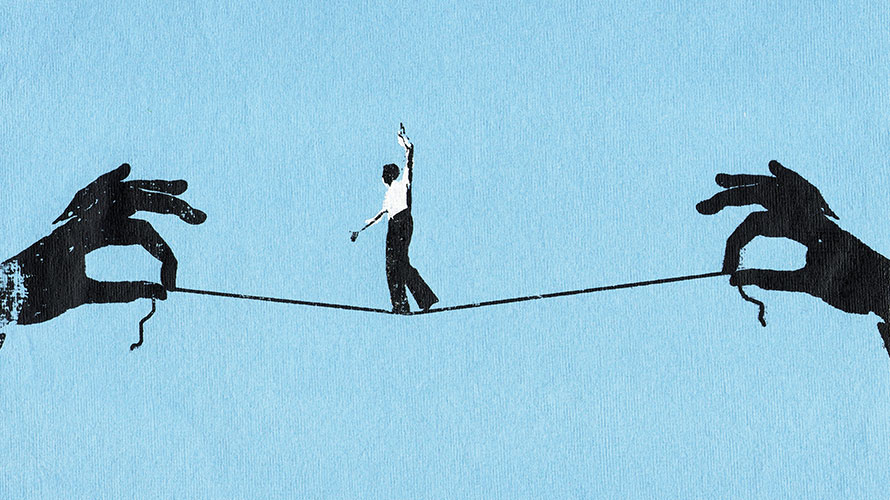
Trust is the foundation of any relationship. It is pivotal to how we interact in our personal, professional and social spheres. We need to trust in something or someone to feel safe. When we cannot rely on a person or thing, when we doubt they are being honest or whether they are telling the truth, then our sense of emotional safety is destabilised.

My default is that I give people my trust willingly, until they do something to jeopardise it. I am an open person – open door and open heart. I am not someone who carries keys around with her and locks doors and drawers behind her. Physically nor emotionally. Perhaps it is the inner country bumpkin in me? We didn’t have our own house keys growing up – the front door was always open. We trusted our community. Perhaps it is naive?

As a teacher I took this value into my practice, I never locked my door, I left my handbag tucked under my classroom desk. I left my office door open, with my personal affects out. I am not advocating this for you all to do by the way, or judging that you do not trust if you do not do this, but I am just stating that in my experience I believe if you give trust, you get trust back. Trust is a value that needs to be practised and modelled.

In 18 years of teaching and leading in large inner city urban schools, I have never had anything stolen from me. If students passed comment on my lapse security measures, I would tell them that I did not need to lock my door, because I trusted our students to do the right thing. They would sometimes give me a wry smile or comment “But Miss-Man it’s not like that on the streets”. Precisely, I would reply, we are not on the streets. We are creating a culture, a community, based on trust.

As a Headteacher I talked about integrity with our students a lot. I explained it to our school community as we trusted (and expected) everyone to do the right thing even when noone was watching. Trust inspires us to be values-led in our actions, trust empowers us to do the right thing.

Right now, our trust is in our key workers. We trust their skills, experience and expertise. We are relying on the workforce who serve communities in various ways and trusting that they will do everything they can to keep us safe. Alas, we do not have as much trust in our politicians and in the Government. Their actions, decisions and behaviours have resulted in our trust in them being lost.

Trust in our leaders is vital. We look to leadership to set the tone in our homes, our schools and in our communities.

Trust in our friends, families, partners and colleagues is essential. We need to be able to rely on others, be able to speak and hear the truth, be able to trust that we are safe.

Trust in ourselves is also important. We need to be able to rely on ourselves, be honest with ourselves and keep ourselves safe, physically and emotionally. We need to trust our intuition as our instincts about a person or a situation are normally right.

My trust has been broken in the past, by friends, by partners, by colleagues and by employers. I might have forgiven those who have lied to me, or been disloyal, but I won’t forget how these actions hurt me. A breach of trust is a deeply personal thing.

Respect and trust are not just words to be spoken, but actions to be taken. Without trust, what do we have?

#DailyWritingChallenge Day 22: Emotions

noun. a strong feeling deriving from one’s circumstances, mood, or relationships with others.

Emotions are biological states associated with the nervous system brought on by neurophysiological changes variously associated with thoughts, feelings, behavioural responses, and a degree of pleasure or displeasure.

I don’t know about you, but I feel like I am on a continuous emotional roller coaster that keeps racing through the docking station. The days soar quickly into being high, and dip quickly into being low. The pace of time is either too fast or too slow. I am craving to place my feet on steady ground, to recalibrate and to decompress.

I’ve never liked rollercoasters, they don’t do anything for me, give me a Big Wheel any day! I like to face forwards, know where I am going, see what is coming. I like a steady pace, a sense of perspective and to feel safe and secure.

At the moment, each day is the same, yet our emotions are constantly changing, ebbing and flowing within us. As we process our own emotions, we support others in processing theirs too, we sponge up how they are feeling.

I am hearing lots of phrases like: emotions are high… emotions are raw… emotions are intense…

Emotions are surfacing. Emotions are overwhelming some people.

I know a lot of people who are feeling very anxious right now, this situation we find ourselves in is an emotional trigger. I have friends seeking medical intervention, medication and therapy to regain control over their emotions. I have encouraged several friends to try practising some mindfulness as a strategy for managing the strong emotions that are very present and powerful.

We are trapped in our houses, but we do not need to be trapped in our emotions. Emotions are a currency. Emotions are a language and a mode of communicating.

Acknowledging the emotions we are feeling is the first step to processing them. There is no point pretending they are not there, or in denying them. We are our own emotional gatekeepers.

Identifying and labelling the emotions we are feeling helps us to then articulate them. I have worked with lots of children who feel deeply but who do not have the vocabulary to express the emotions they are experiencing – words like happy, angry, sad each encompass a continuum – the more words we have, the more accurately we can describe our emotional state.

Accepting the emotions we are feeling is an act of self-compassion. I have felt lonely this weekend. There it is, I have said it out loud. Loneliness is not an emotion I generally feel. I have a busy professional and social life, I have a lot of love in my life, I spend time with a lot of people, but the solitude of a 4 day weekend got to me. I have social interaction but I have been craving physical contact. On Sunday, I just needed a hug.

Realising this emotion is temporary, that it will pass, is how I have worked through it. I know this is not a permanent emotional state I will be stuck in.

Investigating the emotion, has led me to reflecting on how I fill my life. I enjoy solitude when I choose to spend time with myself. The long weekend has felt like a punishment for something I have not done. I did not choose to spend 4 days at home, by myself. Nothing especially triggered my emotional reaction on this occasion, perhaps it was just the knowledge that a lot of people were having a blissful four days enjoying quality family time.

Letting go of that emotion, releasing that feeling, sitting with it reduces the sense of overwhelm. We are experiencing different things that are out of our control, so we will thus experience different feelings that at times will feel out of control. I have talked to friends about their frustration in their ‘normal’ coping mechanisms failing them. We are living our ‘normal’ lives, so changes to our strategies are needed to respond to changes in our routines.

On social media over the weekend, I could sense that lots of people were struggling. So I started a positivity wave, check out the thread for #HopeToCope. Lots of people got involved in sharing some to uplift others.

So if your emotions are feeling intense and you feel like you need to regain some control try emotionally self-regulating by using the following steps:

Acknowledge… Identify… Accept… Realise… Investigate… Release…

I visualise blowing up different colour balloons to represent each emotion, writing the emotion on the balloon and releasing them into the sky.

I give myself permission to feel and express the emotions. Watching the inclusive choir sing and sign This Is Us on Britain’s Got Talent, allowed me to have a cathartic cry.

Being emotionally aware will enable us to emotionally process and emotionally regulate. Stopping ourselves from emotionally editing how we are feeling, will enable us to explore our emotions rather than try to block them. Developing our emotional intelligence will enable us to read others, as our emotional scanning abilities need refining to read online body language, virtual social cues and socially distant changes in behaviour.

Let’s be honest with ourselves and others about our emotional state so that we can help each other by connecting to our emotions.

#DailyWritingChallenge #Emotions

#DailyWritingChallenge Day 18: Freedom – a blog by Debra Rutley

Sometimes you don’t know you need to be freed. You may not know what you want to be freed from and you may not even know what you want freedom to do.

I didn’t know until I ran away.

Subconsciously keeping the peace erodes choice and independence and can lead to a sort of subservience and fear. I didn’t realise that I had little choice in my life until I left and starting choosing.

I chose simple things, like a house with stairs.

I chose curtains and a white Duvet cover which gave me so much joy.

I chose 6 music.

I chose to cook or not.

I chose to eat chocolate.

I chose what to wear.

I chose how to spend my money.

I chose holidays – Italy for food, wine and the views.

The big things were shaped by my freedom to choose to live the life I wanted. How I wanted to be and how I would respond were part of how I chose my way. My choices allowed me to shape the life I want and have the courage to live that life.

My new-found freedom allows me to make choices based on my values and what matters to me in life. I know the real value of freedom now I have it and I’m not caged by the opinions of others.

I have many more choices to make.

#DailyWritingChallenge Day 21: Purpose

noun.

  1. the reason for which something is done or created or for which something exists.
  2. person’s sense of resolve or determination.

With time on our hands, we are reflecting more than ever on some of the bigger questions in life: What is the purpose of life? What is the purpose of humanity? What is our purpose as individuals?

This time to pause, to think, to process, has come at a pivotal time for me. I read Simon Sinek’s Start With Why many years ago now, and I use his Goldern Circle: Why? How? What? to structure my thinking.

Let’s start with why. Why am I an educator?

I fell into teaching after studying for my BA Hons in Post-Colonial Literature, although I have teaching in my genes from my Grandmother who was a primary teacher and my Mum who was a Nursery Nurse. I was told often as a child I would make a great teacher, I fought it, but in 2002 I felt a shift and I applied. 18 years on I have had a great career in schools, I have now moved into Higher Education.

Let’s move to how. How do I have impact?

I am a driven person and I have a strong work ethic. I have worked in a number of schools, and I have started two start-up schools as a founding Headteacher. My impact is with people – I invest in relationships, I recruit great educators and I empower them to fulfil their potential. I love connecting with people and driving collaborations. Nurturing others, especially vulnerable children is where I can see the difference I make.

Let’s finish with what. What is my legacy?

I am proud of the school improvement work I have been involved in throughout my career – playing pivotal roles in driving up standards and moving schools from Inadequate to Good, and Requires Improvement to Outstanding. I have led the improvement of results in various subjects through my strategic leadership of teaching and learning. Outside of school I am proud of co-founding #WomenEd and #DiverseEd.

Another way to think about your purpose is to reflect on your Ikigai:

Ikigai is a Japanese concept that means “a reason for being”. The word refers to having a direction or purpose in life, that which makes one’s life worthwhile, and towards which an individual takes spontaneous and willing actions giving them satisfaction and a sense of meaning to life.

#DailyWritingChallenge # Ikigai

What is your profession? Education. I am no longer a teacher, I am now an educator.

What is your vocation? I thrive on empowering people to lead change in self and others.

What is your passion? I care passionately about diversity, equality, flexibility and wellbeing.

What is your mission? I am committed to helping others make a difference, to leading systemic change.

What do you love? I love organising events, facilitating training, presenting ideas and writing.

What are you good at? I am good at connecting people and ideas, seeing the bigger picture and developing collaborative partnerships.

What does the world need? The world needs hope, optimism and change makers.

What can you be paid for? Mentoring, coaching, facilitating, training, speaking and possibly writing.

So if you are feeling lost right now, which many people are, anchor yourself by returning to your core values and do some exploration through reflection on your raison d’etre. Revisit your core purpose and have a go at answering the questions I pose.

#DailyWritingChallenge #Purpose

#DailyWritingChallenge Day 20: Growth

noun. the process of increasing in size.

“the upward growth of plants”

Personal growth is the ongoing process of understanding and developing oneself in order to achieve one’s fullest potential. Personal development is a vital part in a person’s growth, maturity, success and happiness. It is the foundation of emotional, physical, intellectual, and spiritual health.

Last year I bought a new house. I hadn’t owned property for a while as I had been renting in London, moving around for different jobs, following several years in Canterbury where I had been quite settled post university. Also I was living in places and areas in London that I could not afford to buy! Part of my relocation, out of London to Oxfordshire, for a promotion, was to buy a house and lay down some roots.

I bought a new build, so the house was completely finished when I got the keys, but the garden was just a patch of mud. As Spring broke, this time last year, I considered what I wanted to do with it. I imagined the sort of garden I wanted to plant and nurture.

The irony of being put on gardening leave, is that I did spend my first few weeks gardening! One of my Dads from the secondary school is a gardener, he came around and extended my patio, turfed my lawn, planted trees and painted my fence. My parents then came up and we did multiple trips to the local gardening centre. I know nothing about plants, so my Mum advised me on what would look good and what would be low maintenance for me to nurture and tend to.

After they left, and before I disappeared on a plane, I spent many days digging holes in my border to plant shrubs and sorting out pots for my patio. Being outside, keeping active and getting me hands dirty helped me emotionally process. Watering my lawn and my plants each night, gave me a routine to a day where my schedule had disappeared. I wasn’t housebound during this time, but I was cocooning myself at home. As a friend describes it – I needed to crawl into my cave – to recuperate, to restore, to come out later stronger.

When I planned my trip to South America for 2 months I was thus more worried about leaving my garden than I was about leaving my house. My cleaner had keys and was going to come around once a week to check on the building. But I needed to find someone to keep the plants alive. I was chatting to one of my primary school teachers, who had a daughter with the same name as me, I asked what her plans post her A Levels were and if she would like a summer job. She accepted and came around to my house each night to water everything for me to keep it all alive. She was delighted with the wad of cash I gave her on my return which paid for her summer holiday so we were both happy.

I came home, feeling lighter and happier, to a thriving garden. My silver birches had grown, my lavender and verbena were in full bloom and my garden was also full of butterflies. I had spent time away, focusing on personal growth, following 18 years of being absorbed by professional growth.

Less than a year on, and I find myself with bountiful time on my hands again. As the sun has come out, I have enjoyed occupying myself in my garden. I have weeded, I have mowed and I have strimmed. I am watering everything each night. It is giving me a daily routine once again.

As buds grow on my plants and my trees, as insects return to the garden, I love throwing my patio doors open each morning and listening to the birds tweeting before the neighbours begin to stir.

My garden is growing, flowering and blossoming under my watchful eye as I nurture each thing I have planted. I am watching the clematis slowly climb up its trellis, finding opportunities to wind itself around the structure.

The conditions for growth are all there – daily sun, regular water, clean air – along with love and attention from me. My garden is healthy. My garden is growing into its full potential.

Alongside the growth of my garden, I am also responding well to the changes in environment and climate we are currently experiencing. Our conditions for human growth are often compromised by our chosen lifestyles or stilted by not being in the right culture to learn and grow. We may have the ingredients for growth in our reach but our hands are often busy with other things.

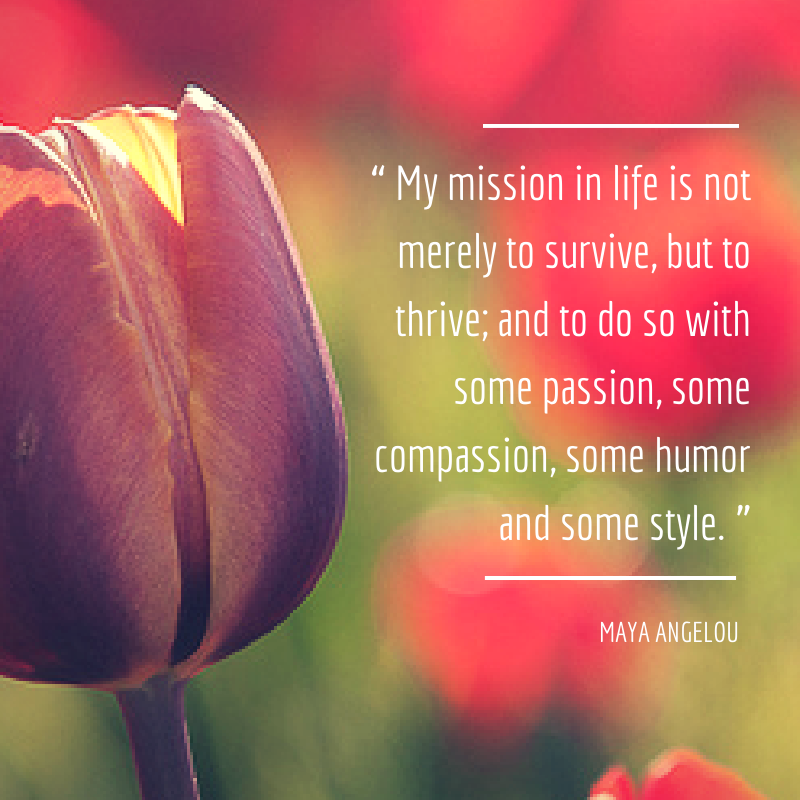
One of my favourite quotes, from the late, great Maya Angelou is:

My mission in life is not merely to survive, but to thrive; and to do so with some passion, some compassion, some humour and some style.

Maya Angelou

I have used the surviving to thriving continuum a lot in blogs, talks and training I have created over the years. I have been coached, and I have coached, to reflect on personal and professional growth. I have considered the culture I need to grow in. I have carefully curated the culture for others to grow in.

So although we are physically in survival mode right now, I am wondering whether it is also an opportunity for us to learn to thrive, an opportunity for us: to reflect on what we need and how we need to grow; to enable us all to fulfil our human potential; and to focus fully on our quality of life.

#DailyWritingChallenge #Growth

#DailyWritingChallenge Day 17: Optimism – a blog by Debra Rutley

Hope, I hour at a time.

For someone whose day job is to have hope where others have thought there is none I’m struggling at the moment.

In AP its important we have relentless hope on behalf of those who often come across as having the least promise. We are ambitious for and on behalf of our students and take each day as renewed optimism in what is possible. A smile from someone who has looked at the floor for 6 months, staying in the classroom for someone who has previously refused to engage in learning and a polite conversation or hello are all signs of hope that spur us on in AP to believe in more.

At the moment I feel more hopeless than optimistic and am frustrated by my lack of motivation. I’m naturally a doer, like to be in control and always have a plan. The anxiety that hits me by surprise on a regular basis throughout the day punches me in the stomach and makes me stop still with a whoa. It’s so physical. My Duvet is all I can think about after that and with every part of me I want to retreat and ride this storm out with it. But I’m not giving in to that again and simply lean in to the anxiety.

At the suggestion of Emma Kell, I am learning to have hope 1 hour at a time. Days are too long. I’m going for the fresh start every hour and it’s beginning to work.

The to do list and potential plan is there to be slotted into hours during the day if I can manage. Some hours are lost to the anxiety or pacing. The hours don’t need to last an hour. If I start something and through lack of motivation or distraction I give up, I go with the discomfort and start again during another hour or save it for one of my hours tomorrow.

I love this new feeling of hope by the hour. I can give my hours away – to playing Risk, making dinner or just sitting. It’s forcing me to slow down and think about the small steps each day hour by hour. My hours have potential.

Even the Duvet has an hour during the day.

#DailyWritingChallenge Day 19: Loyalty

Loyalty, in general use, is a devotion and faithfulness to a nation, cause, philosophy, country, group, or person. Philosophers disagree on what can be an object of loyalty, as some argue that loyalty is strictly interpersonal and only another human being can be the object of loyalty. 

Loyalty is an important value to me.

In my family, we may bicker internally, but we defend each other externally. We have each other’s backs. My parents have both walked away from toxic familial relationships and made a stand in our extended family about how we treat each other and expect to be treated in turn. This modelling of sticking by your values empowers us to have voice and agency.

Loyalty is a quality I gift to people in my life, but it is also a quality I expect to receive as well.

I am loyal to my sense of idealism:

In my friendships, we have unwritten, unspoken codes of conducts – we behave in sisterly ways.

In my relationships, I expect loyalty. I have ended relationships where this has not been unwavering.

In my professional sphere, I am loyal to my team, to those who I serve.

In my circles, we are loyal to each other, as supporters, champions and advocates of each other and the shared experience.

In each of these relationship spheres, loyalty is contracted, so when it is tested, the agreement is revisited and reviewed. Loyalty is black and white for me, there is no grey area. I choose not to have disloyal people in my life.

I look out for many people, but I also know that many people are looking out for me.

By contrast, I am not loyal to materialism:

In my tastes and preferences, I am much less loyal. I am not what they call loyal to a brand. I experiment and look out for deals. I don’t eat, drink, wear certain brands.

Loyalty to others, who are human connections, is important to me. Loyalty to abstract ideas or products is of less importance to me.

#DailyWritingChallenge #Loyalty

#DailyWritingChallenge Day 18: Freedom

Freedom, generally, is having the ability to act or change without constraint. Something is “free” if it can change easily and is not constrained in its present state. 

I am a feistily independent person. I am not sure what my parents did to me as a child to make me so. Apparently childhood thumb suckers are more emotionally secure as they can self-sooth, so maybe it is because of that?

Growing up in North Devon, my mental freedom came through reading, my physical freedom came through learning to drive, my financial freedom came through having a part time job and my spiritual freedom came through travelling. My parents gave us the freedom to make mistakes and to learn from them, the freedom to find our way, with their support to fall back on.

On my Gap Year, my freedom came from travelling. I had saved up all of my money from my part time jobs to self-fund and go where I wanted, with who I wanted. I took for granted that my parents enabled me to be free to do so. They actively encouraged me to spread my wings. They gave me the travel bug at an early age, and the freedom to explore the world has continued throughout my childhood into my adulthood.

A memory from my teens is of my girlfriends and I wanting to go on a girls’ holiday to Greece for a fortnight. One of my friends had older, more conservative parents who were putting blockers in the way. I was wheeled in as the mature, reliable and persuasive friend to do a pitch to them about why she should be allowed to come. It worked and the 4 of us went. I was the responsible one ensuring that she enjoyed her freedom but stayed safe. The irony of the situation is our holiday was lovely and very innocent – we hired bikes, cycled every day, ate well, slept in, read lots and laughed all the time – we hardly drank and did not go clubbing. No-one got up to any mischief, even though we were away and we had the freedom to do so! We were being trusted and didn’t want to jeopardise our future freedom.

Going to University, my freedom came from moving away from home. Not that I was not free within my family unit, but I was craving a change of scene, some space and some distance. The freedom of choosing which course, which University, which accommodation was all mine. The freedom of changing my mind whilst travelling on my Gap Year and reapplying too was also my decision. I embraced the freedom of meeting new people, exploring a new place, and thinking about new ideas.

These experiences shaped my thinking about and my experience of freedom. I have always been free-spirited, free-thinking, free-moving. I have been free to make choices by myself, for myself. My freedom of speech is also important to me.

I feel at my freest when I am outside, when I can see space – be it air, sky, sea or sand. I am craving to be walking along a beach or standing on top of a mountain, for the sense of exhilaration that travelling and skiing gives me. But physical freedom is only one type of freedom.

I appreciate how lucky I am to have many liberties that my peers around the world do not have. I have taken my freedom to be myself, to do what I want, to say and think freely for granted, and I need to appreciate this freedom more.

So what is lock down, physical distancing and social isolation teaching us about freedom?

My thoughts are framed by prepositions and as I collate my thoughts I am going to try and reframe each one as a positive, an affirmation of how we are free rather than as a negative, a deficit of what we are restricted to do.

I have the Freedom to…

  • turn the alarm clock off and wake up when I am ready.
  • stay at home and reduce the time spent in my car, on the road.
  • go make-up free, bra free and shoe free.
  • eat when I am hungry.
  • use the toilet when I need to go!

I have the Freedom of…

  • spending time on what I want, when I want.
  • thinking about my future.
  • connecting with people via the comfort of my home.

I have Freedom from…

  • responsibility as I no longer run a school.
  • others relying on me, as I live alone and do not have children.
  • demands being placed on me, as I am seeing out the end of my notice.

I have Freedom through…

  • having a roof over my head.
  • having food in my fridge.
  • having a garden to go into when I need air.

I have Freedom by…

  • being financially settled.
  • reading lots.
  • walking out of my door into the fields and the woods.

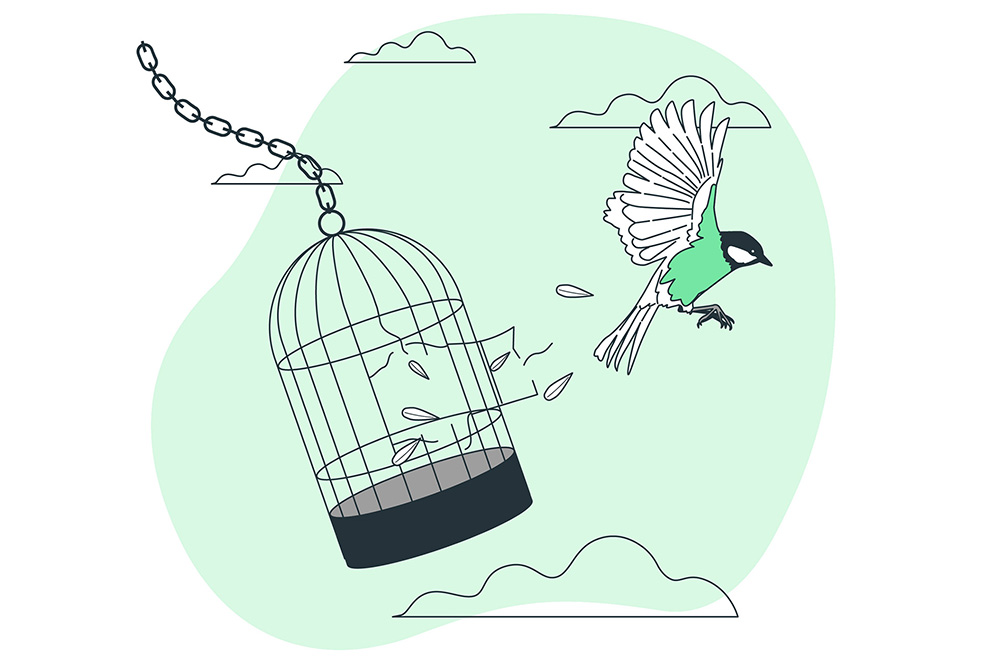
Whether you think of freedom as a bird, a butterfly, a balloon or a river – each has a sense of being free flowing but also of having perspective as they hover above us. The freedom of choice, the freedom of changing direction. Although in many ways we are physically confined right now, it is our choice how we interpret and process this.

During Lock Down, my mental freedom comes through reading, my physical freedom comes through walking, my financial freedom comes through spending less, my emotional freedom comes from talking openly and my spiritual freedom comes through reflecting. We are freer than we perhaps think we are during this time.

#DailyWritingChallenge #Freedom

Featured Image by storyset on Freepik

#DailyWritingChallenge Day 17: Optimism

noun. hopefulness and confidence about the future or the success of something.

Optimism is a mental attitude reflecting a belief or hope that the outcome of some specific endeavor, or outcomes in general, will be positive, favorable, and desirable. 

I am optimistic about so many things right now. I am full of hope and positive energy that through this disruption we will create a shift.

When you Google Optimism lots of upbeat and uplifting motivational and inspirational quotes surface. The metaphors that resonate with me are the ones about growth:

We are not buried, we are planted.

We need ‘manure’, to grow roses.

I am optimistic that as a system we will stand up to the accountability measures that have exploded overnight. Terminal assessments, results reporting and league tables, Ofsted inspections and grading all seem so insignificant. Space has been created to consider a different way of monitoring, evaluating and reporting on how our schools and on how our children are performing.

If we can educate differently in a crisis, we can educate differently in equilibrium.

I am optimistic that as a workforce we are modelling that we can work remotely. Business cases as to why teachers cannot work part time and why leaders cannot function without being visibly in the building have disappeared. Timetables have been rewritten all night. Curriculum delivery has been reviewed and realigned to staff availability.

If we teach and lead flexibly in a crisis, we can teach and lead flexibly in equilibrium.

I am optimistic that as a sector we have become more collaborative and less competitive. The division and the disenfranchisement of so much of the system has caused walls to be built around each man-made island. We have the chance to tear those walls down and the opportunity to build bridges.

If we can co-exist in collaboration in a crisis, we can co-exist in collaboration in a crisis in equilibrium.

I am optimistic that as human beings we are making people-centred decisions. In many ways Mother Nature is reteaching us about humanity. She is shining a spotlight on the things that we have allowed to take over, to take priority, that seem less important to us now. We have people at the forefront of our collective endeavour.

If we can be people-centred in our decision-making in a crisis, we can be people-centred in our decision-making in equilibrium.

I am optimistic that our community values have been strengthened through these difficult times. The surge in gratitude and appreciation for our key workers, the number of people volunteering, the positivity and simplicity of initiatives such as #RainbowsOfHope shows our society at its best.

If we can be values-led in a crisis, we can be values-led in equilibrium.

I am hopeful and confident about the future success of our education system. I am optimistic that in this pause, that we will listen, that we will learn and that we will grow from this opportunity to recreate and to co-create the system that our children deserve.

#DailyWritingChallenge #Optimism

#DailyWritingChallenge Day 16: Family – a blog by Debra Rutley

An open letter to my Aspire Family:

Dear Aspire Family,

That we call ourselves a family is something I love and feel really proud of.

Right now, I’m missing my family.

I’m missing the guaranteed warmth, love and connection that awaits at every school site.

I’m missing your smiles, laughter and even hugs!

I feel the loss that our students must feel without you.

You have been my family for almost 20 years and I don’t say enough how much I appreciate being and working with you all.

Reminiscing, as families do, on our good times, especially the Revival Days at the end of every year brings a smile to my face and makes me laugh out loud. Being silly, not self -conscious and a good sport made these days wonderful memories to cherish. My favourites were the full staff flash dance, singing to Britney, the money wind tunnel and so much laughter with and at each other. We all have favourite memories and stories and we have loads of them.

The big magic moments of team days are not what knits us together. We are connected through the everyday joy and love, the little things we notice and do and our shared values.

You do small things that change lives and show that no matter what, you are still there day after day. Forgiveness is a given, tough conversations can happen, we can make mistakes, we support not judge and we have each other’s backs.

Our students and visitors feel this too. We embody those motivational pictures and carved words that many families aspire to “love lives here”. People see the values in our behaviours and people know where we come from.

When times are tough and challenging for us as a group, individuals or for our families there is guaranteed support, sometimes from an unexpected corner and often from lots of corners.

Right now, we are acting like the whole world is part of our family asking our usual red thread questions:

“What if that was my child?”

“What if that was my sister?”

And as usual we are asking:

“How can I help?”

And we are helping our whole community.

Thank you for being that family people would want to choose.

Debra